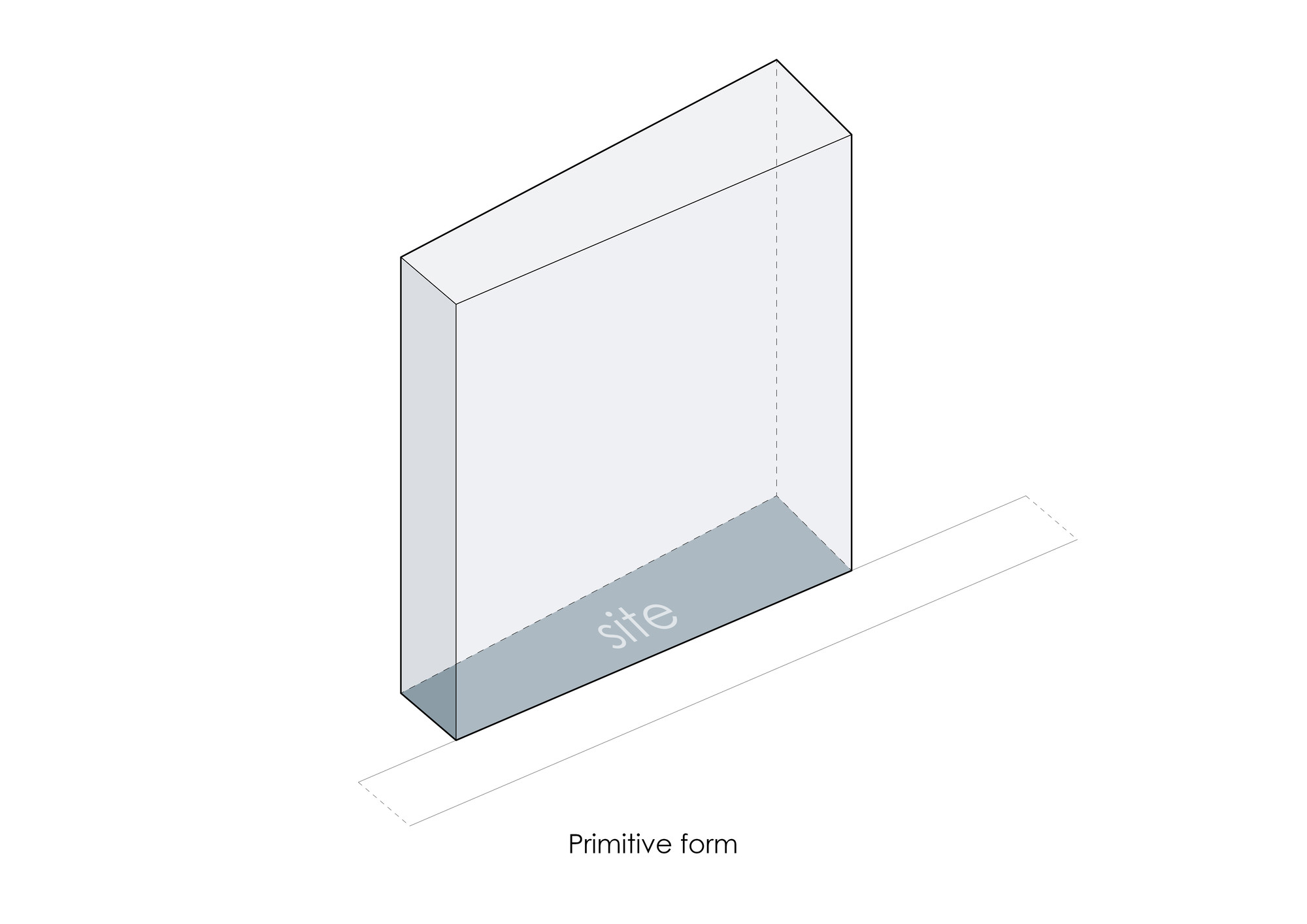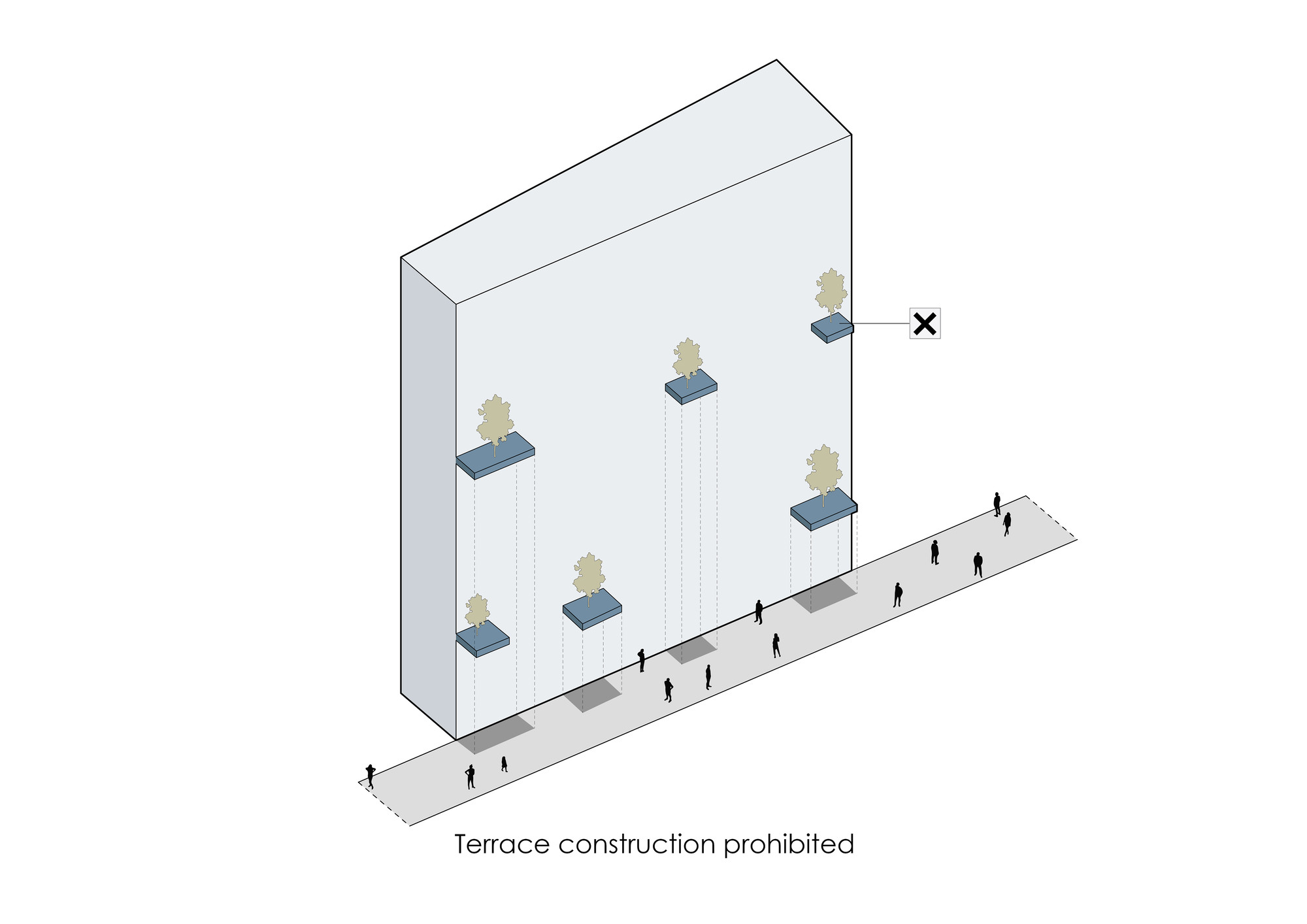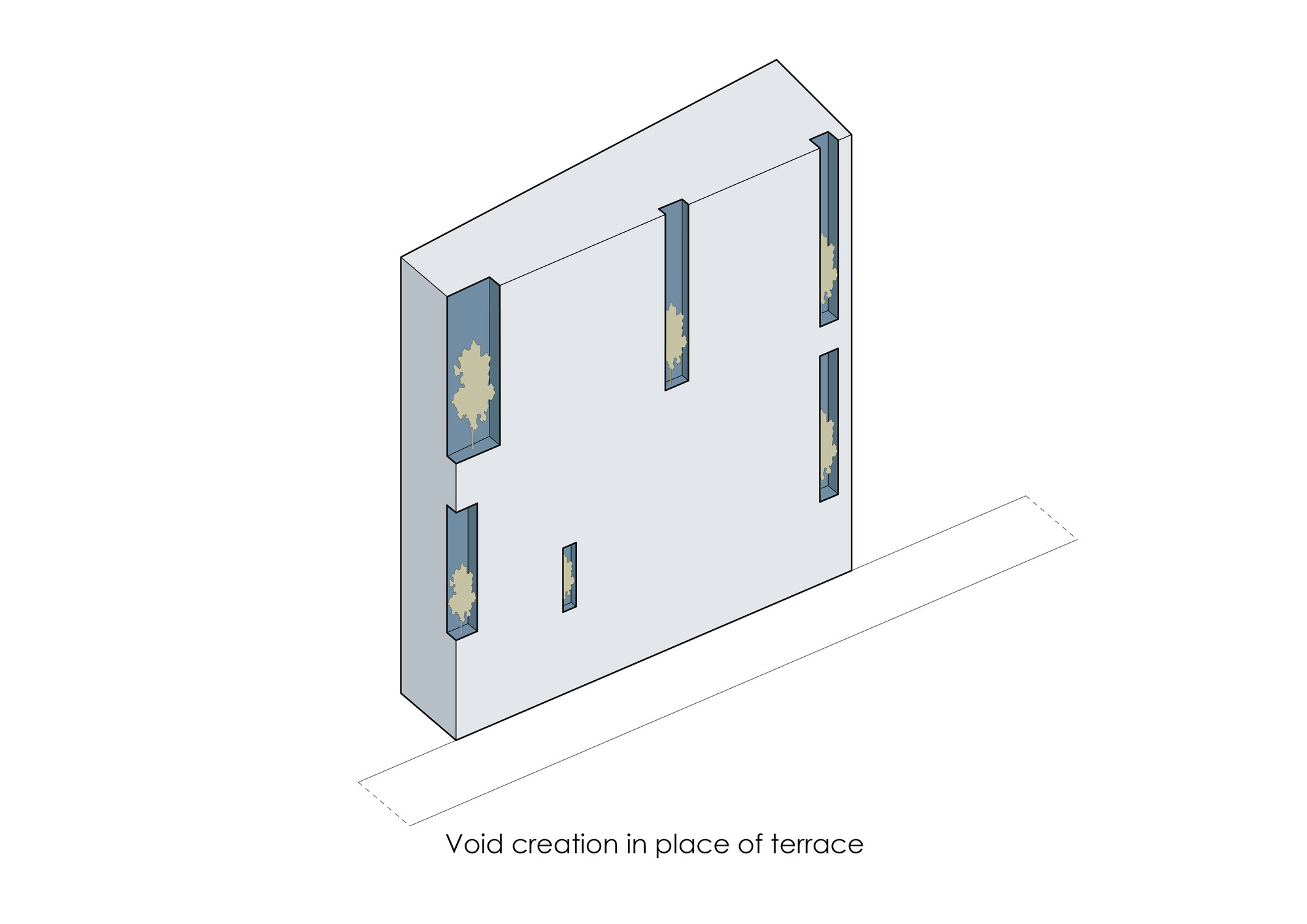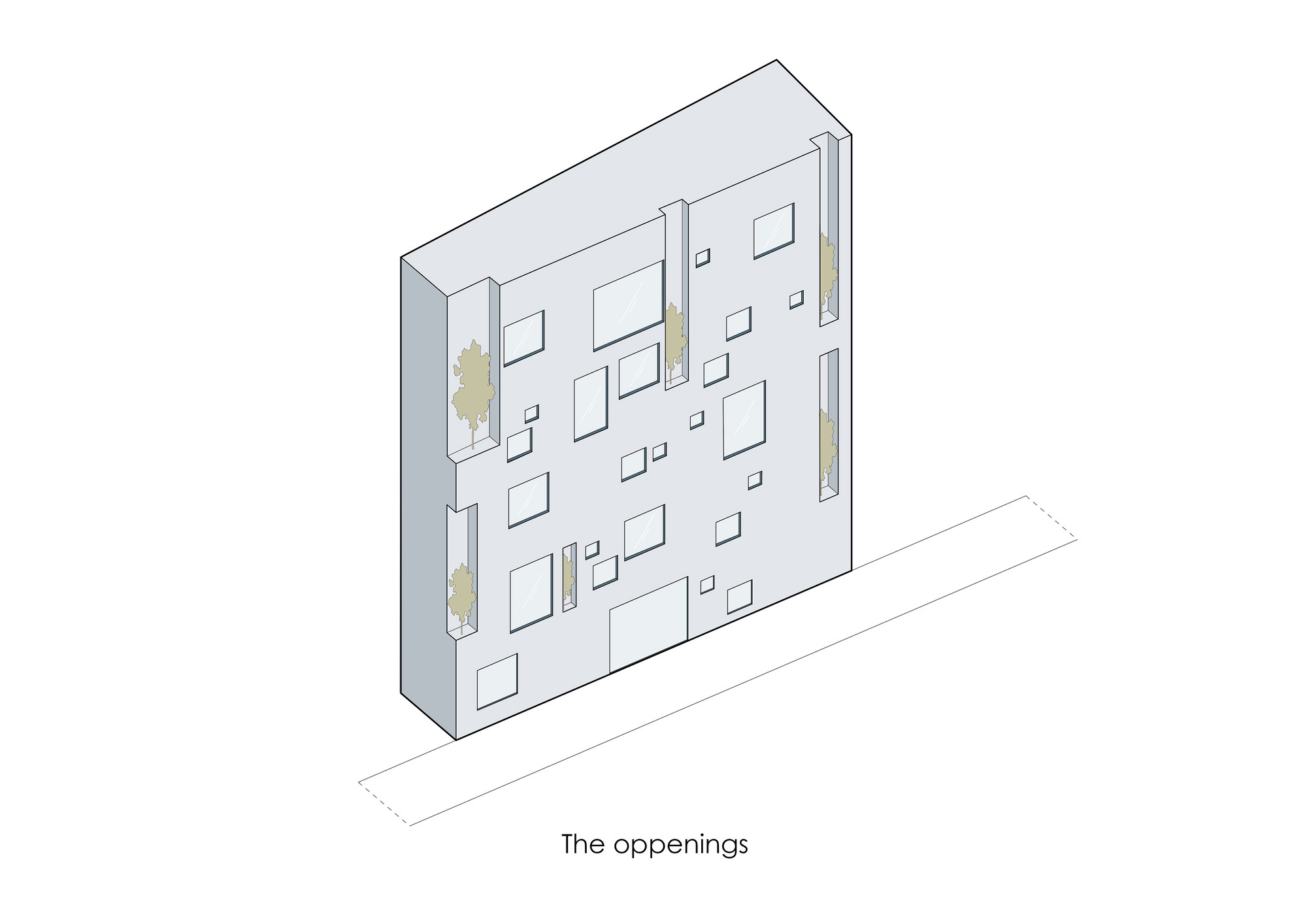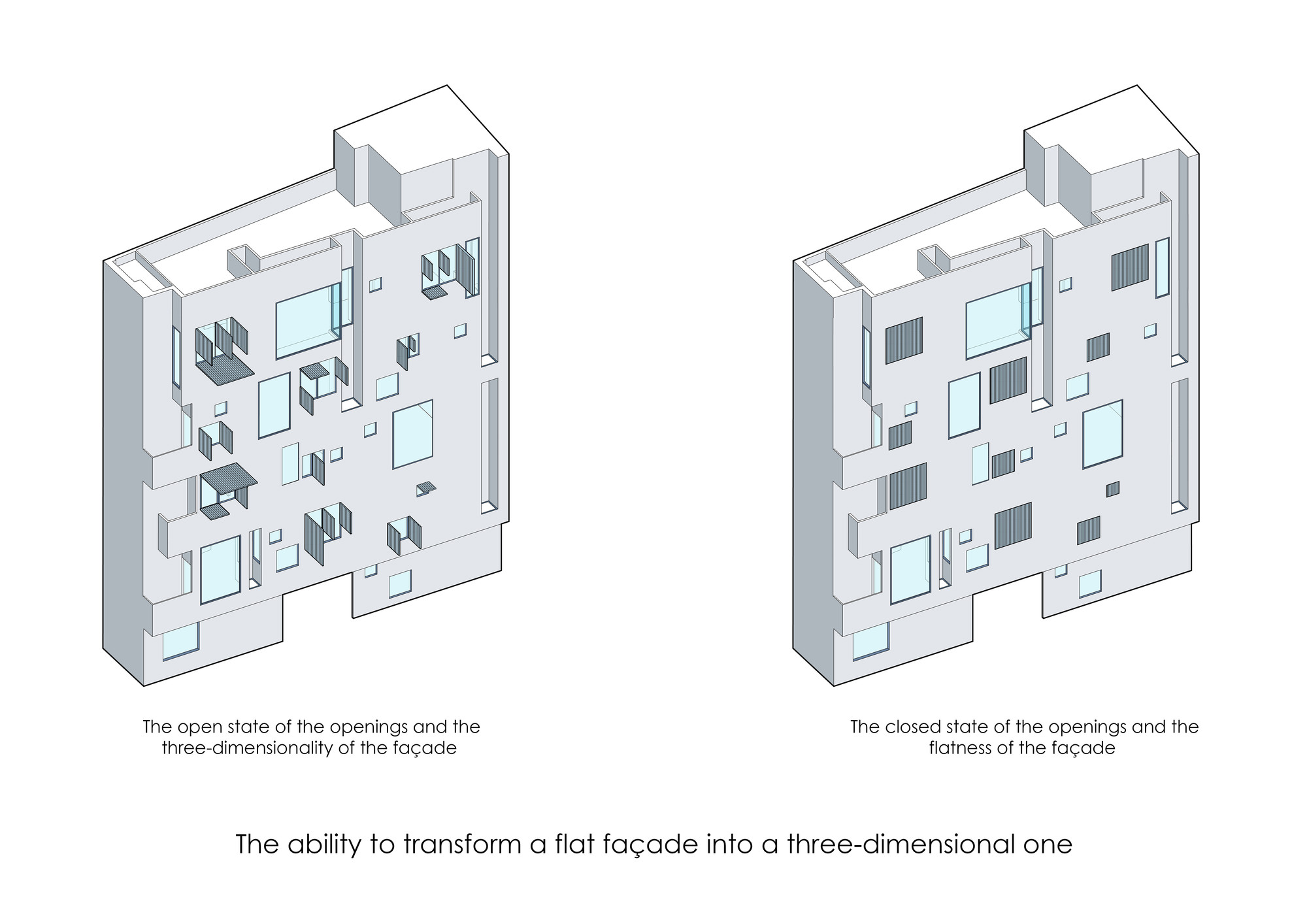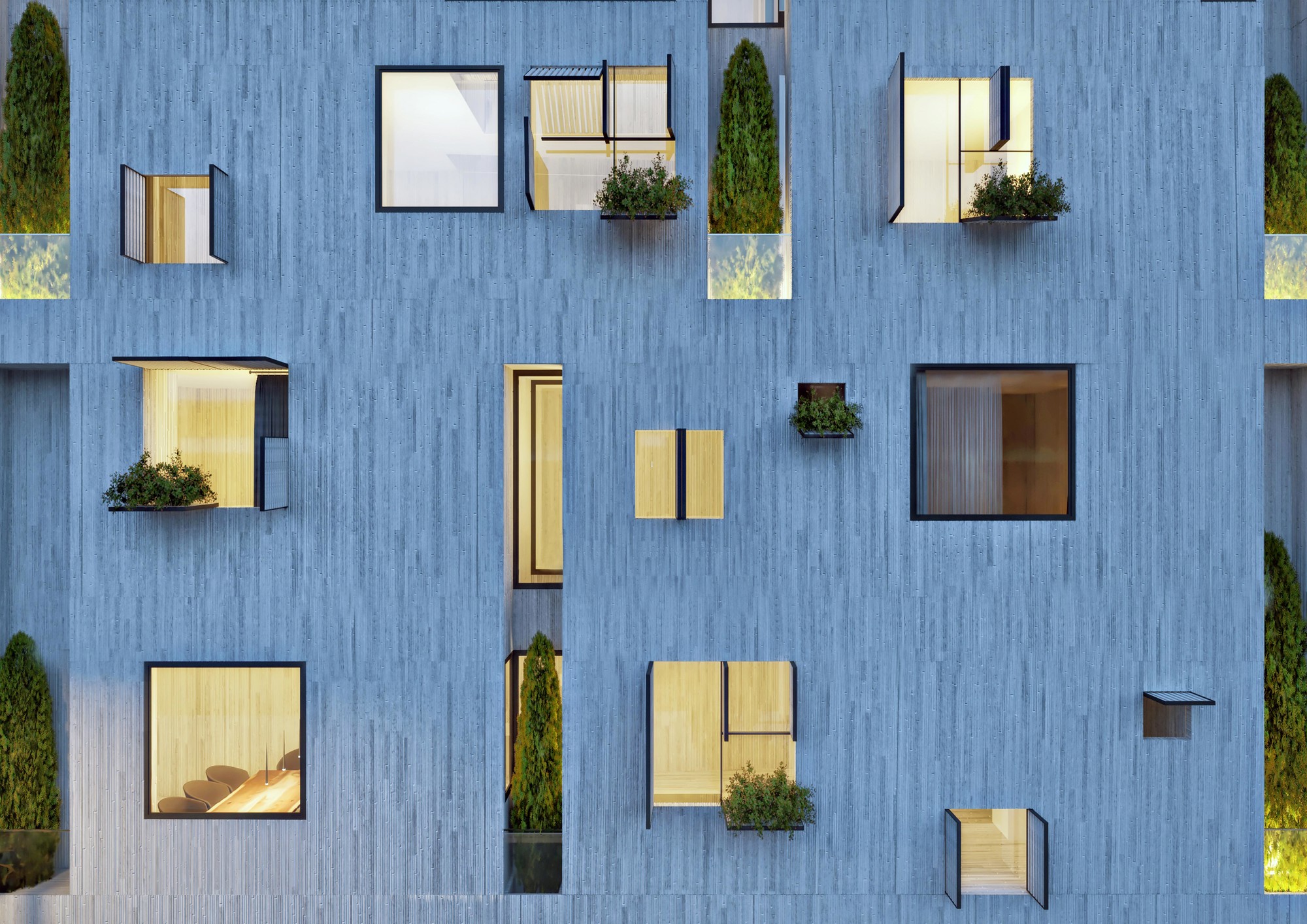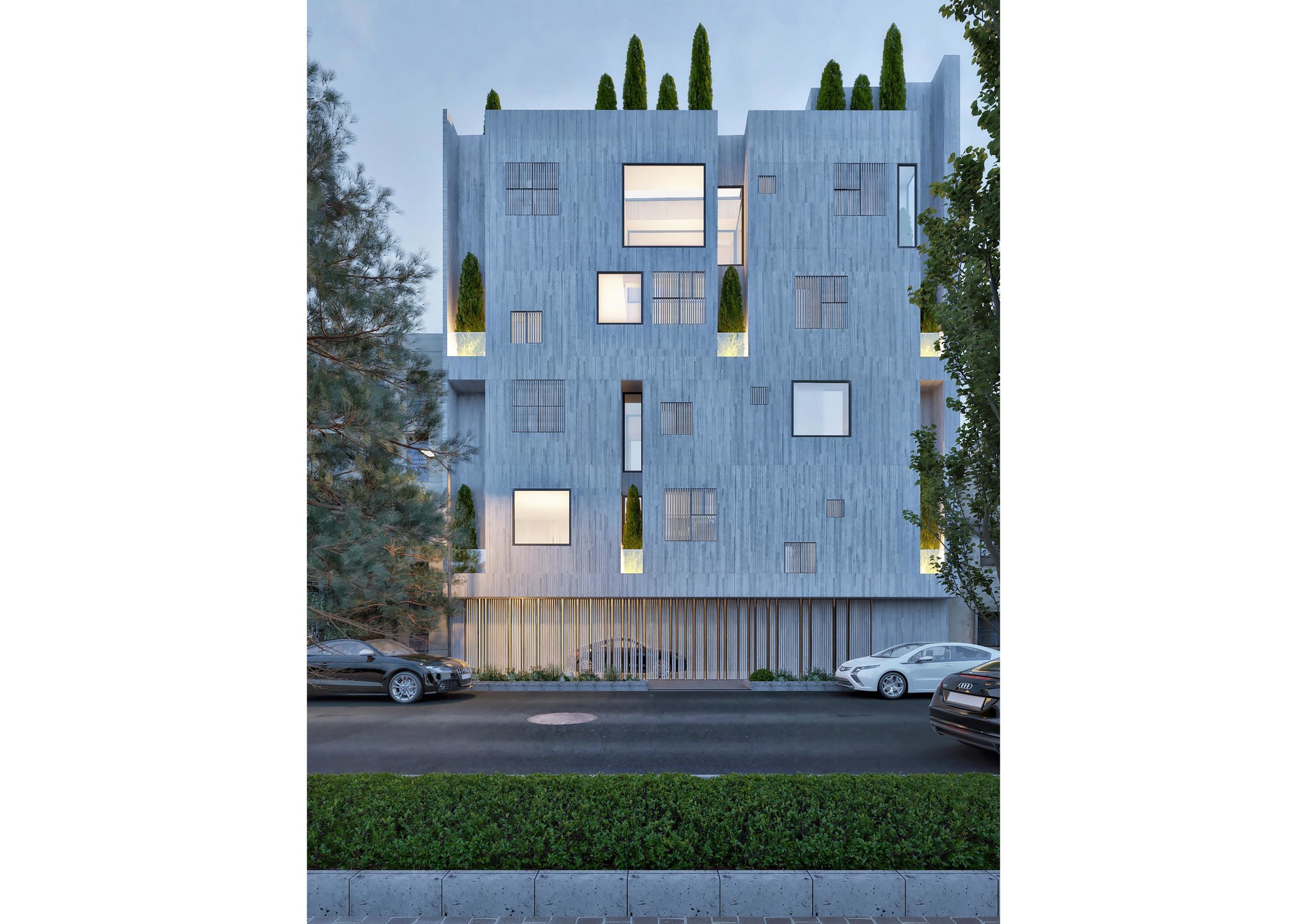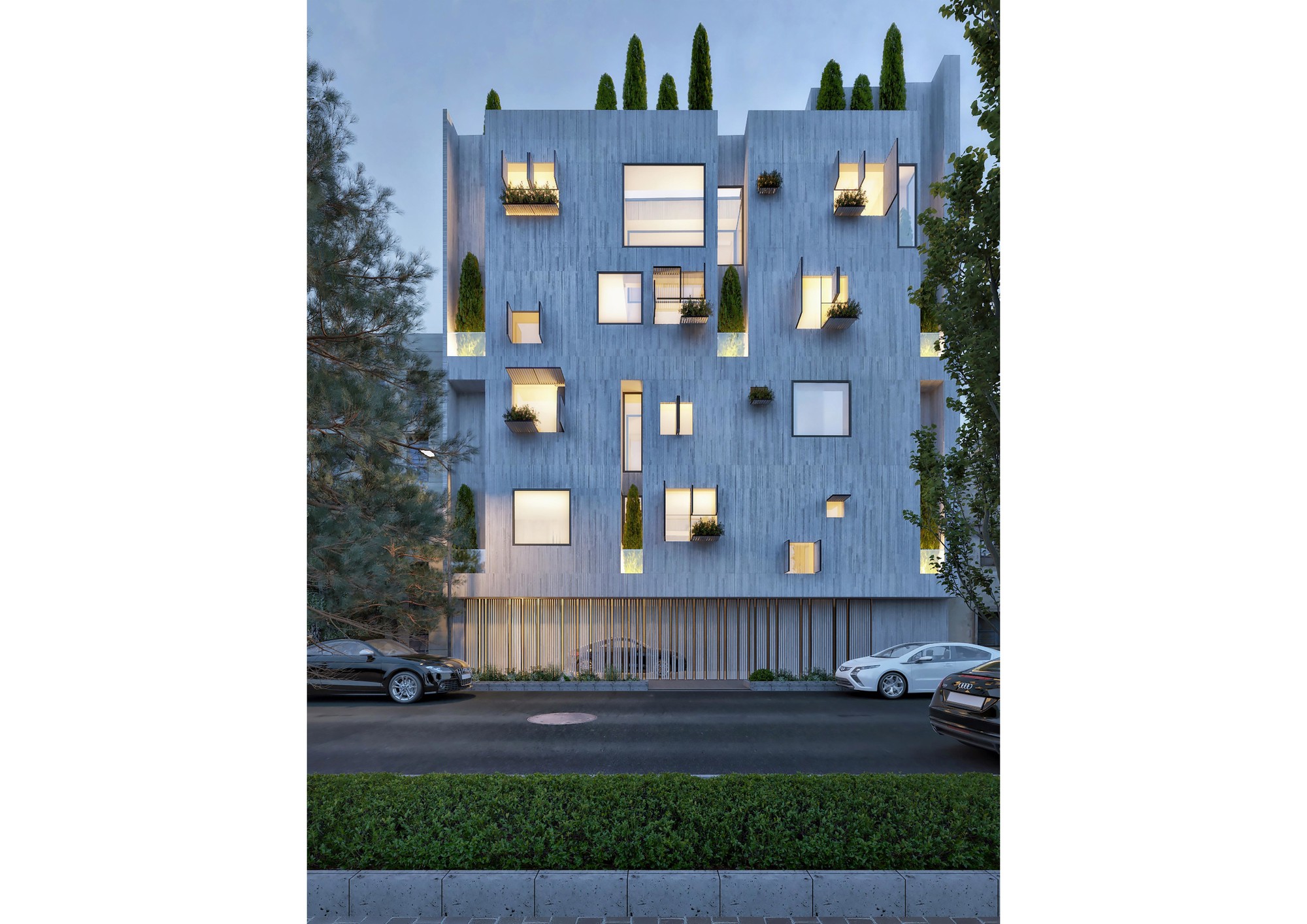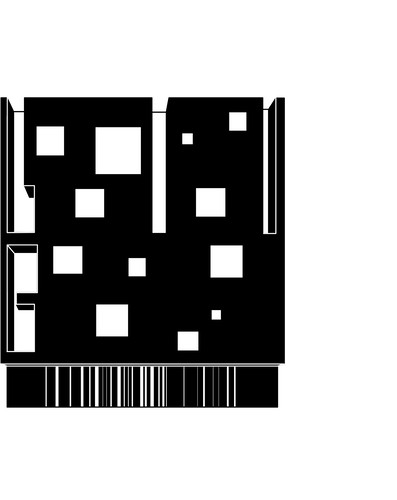

This project is a residential building, designed on a small-scale plot of land. The design challenge in this building was to utilize permeable grooves in the volumetric form of the structure and create high-quality, small-scale spatial experiences within the interior spaces. The use of narrow and small voids (atria) at various levels and dimensions allows the integration of compact residential spaces with greenery and permeable voids. This combination transforms the compactness of the spaces into a unique architectural spatial quality within the project. The project aims to merge the internal and external organizational strategies through permeable facades and voids. On the building’s exterior geometry, the openings in the façade—based on their shape, geometry, and type of operation—not only transform the façade into a three-dimensional surface but also create spaces for placing flower pots within the double-skin façade. The building program consists of two distinct duplex units. This arrangement allows the permeable voids to penetrate through both levels of the residential spaces, providing appropriate spatial arrangements tailored to residential needs. The material concept of the project involves the use of stone with vertical grooves. In areas where openings are present, the stones turn into louvers, acting as operable openings while maintaining the façade’s continuity. This approach offers diversity in the façade’s behavior, allowing for varied opening patterns within the modular square geometry.