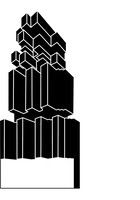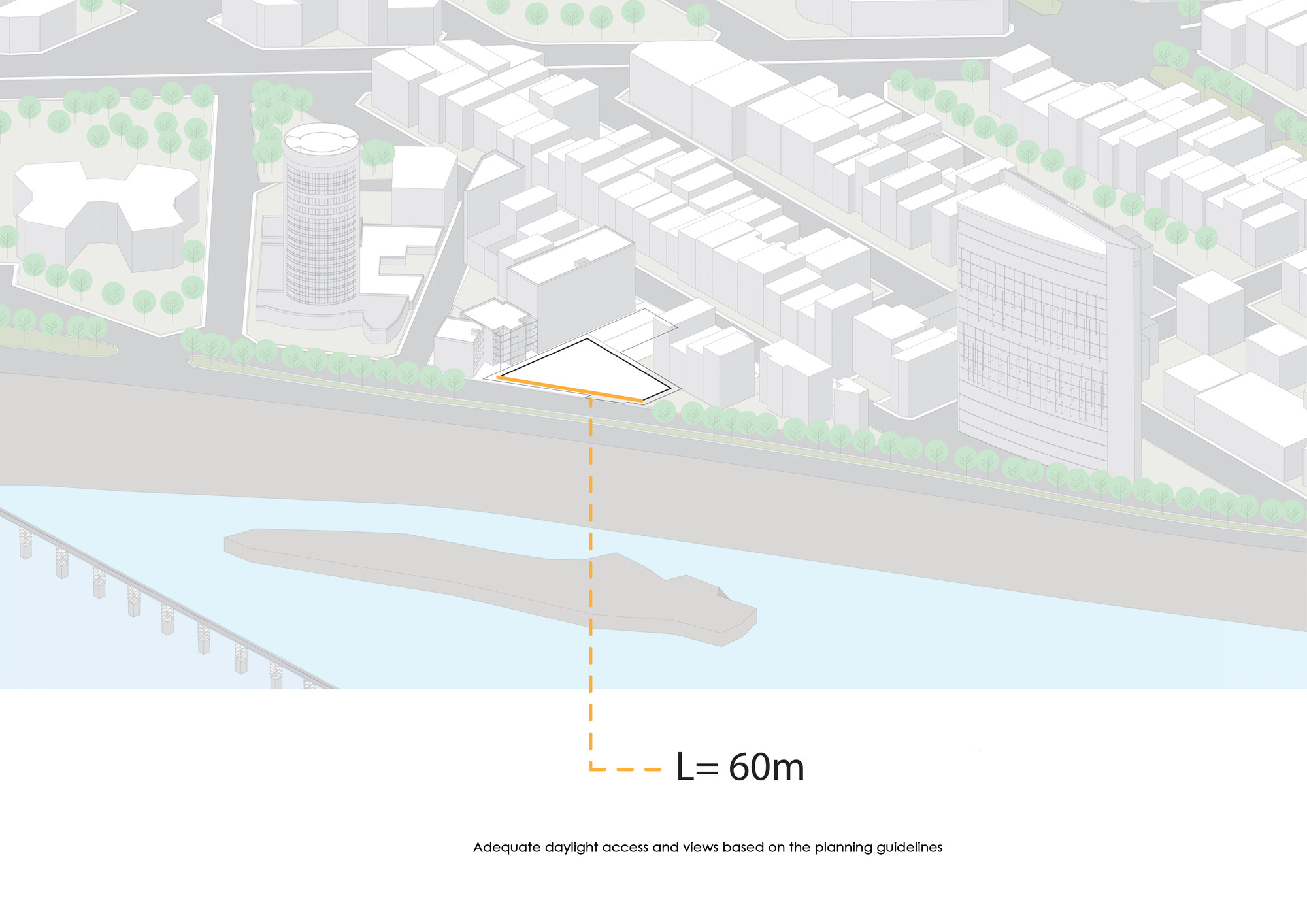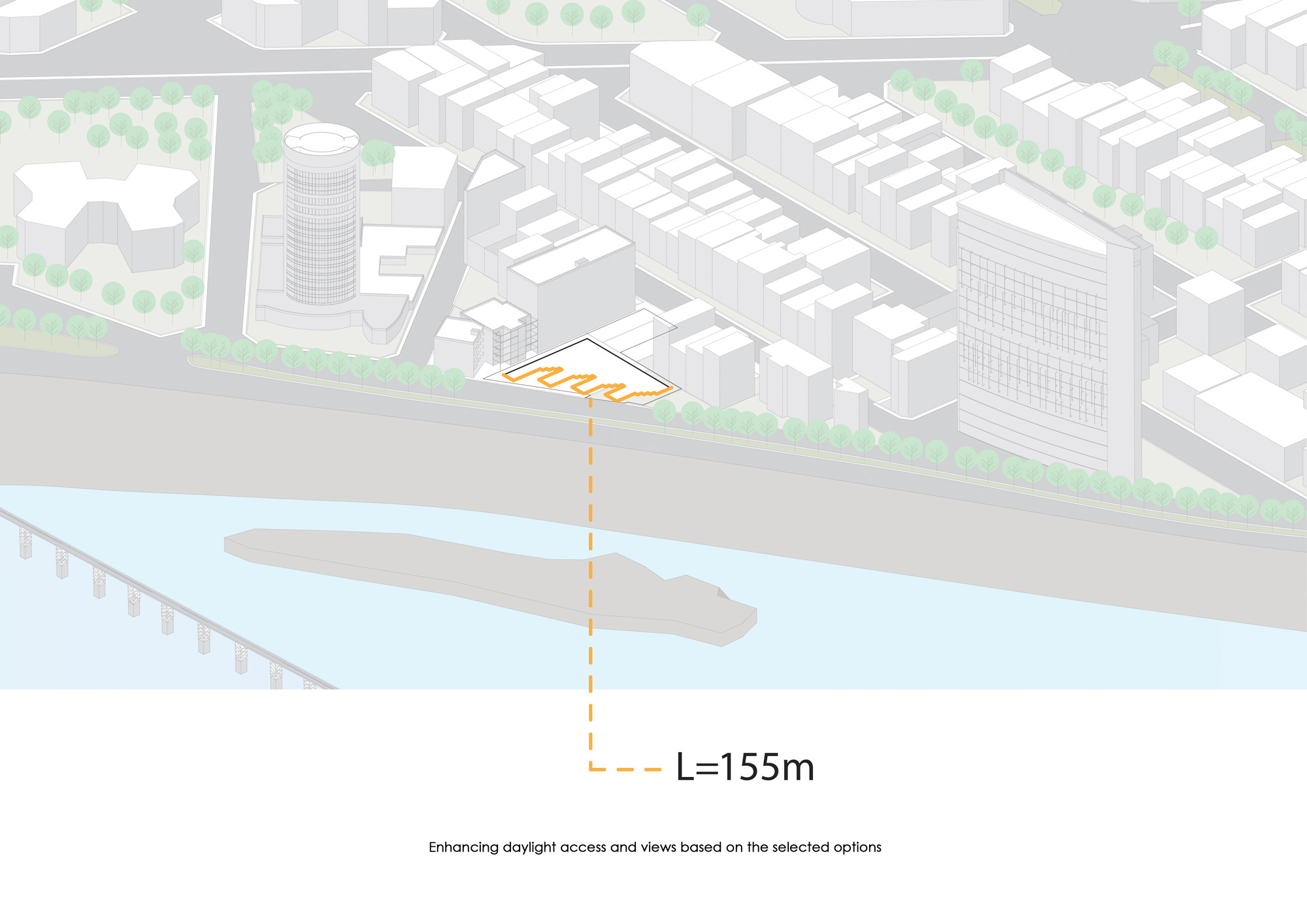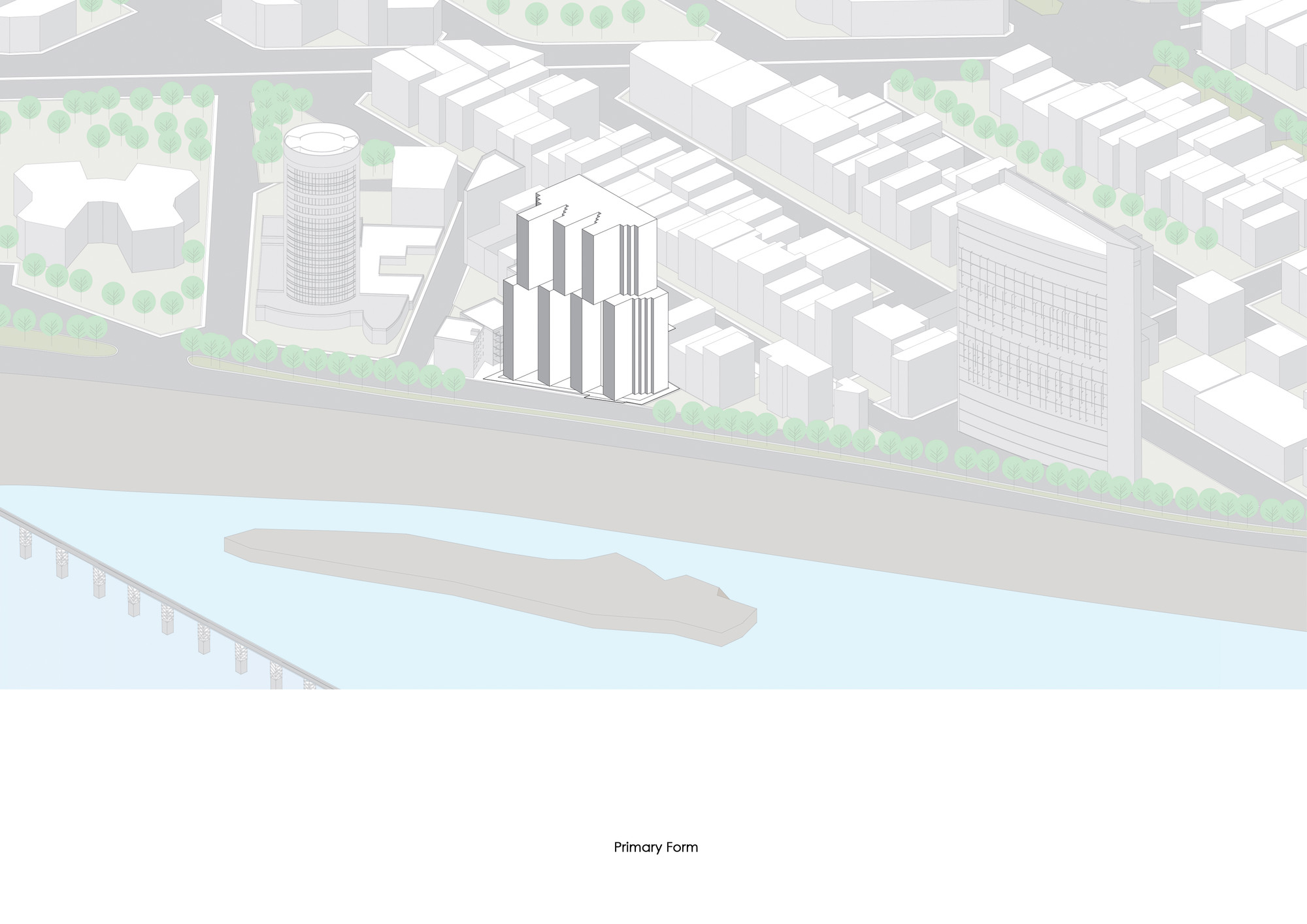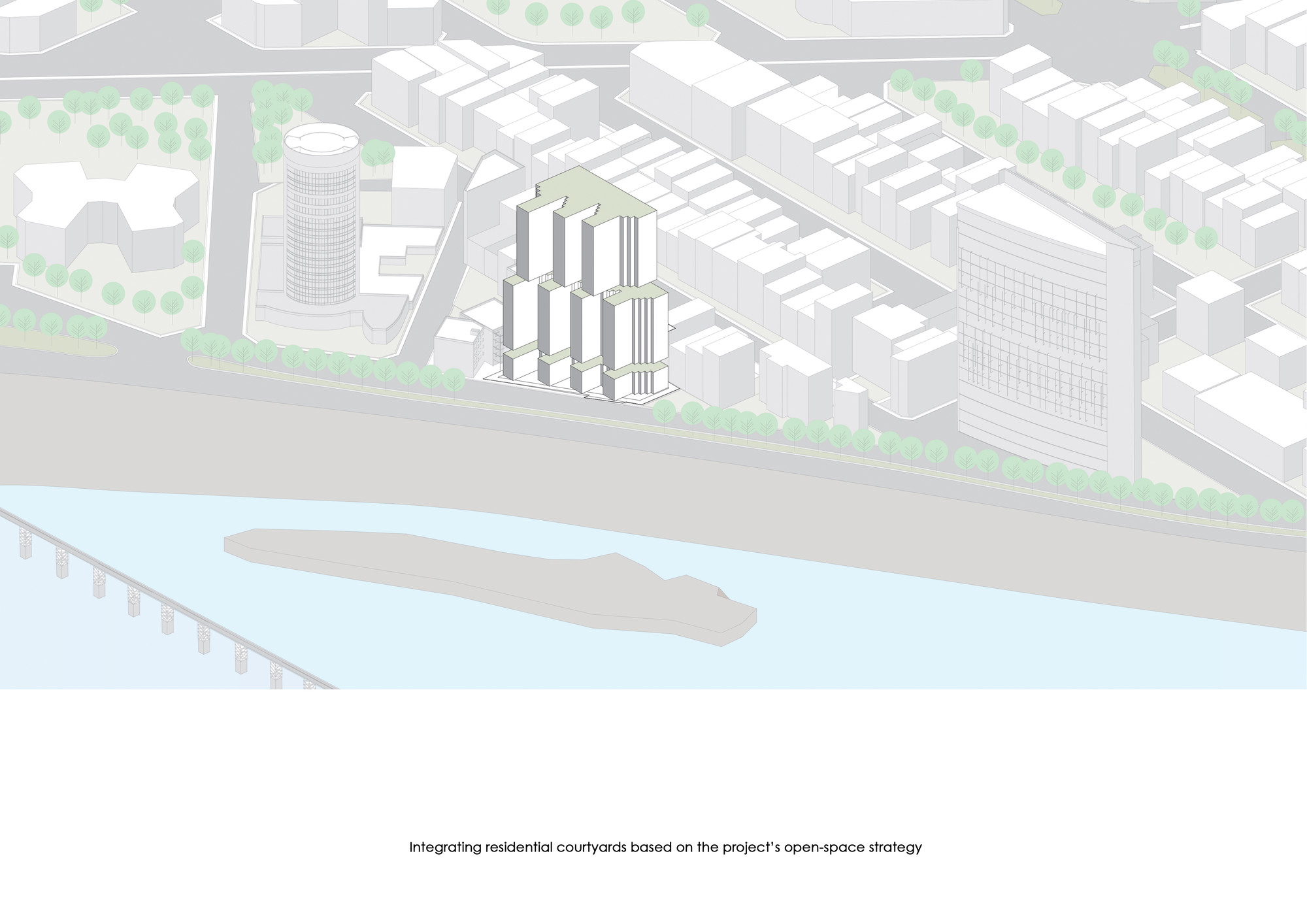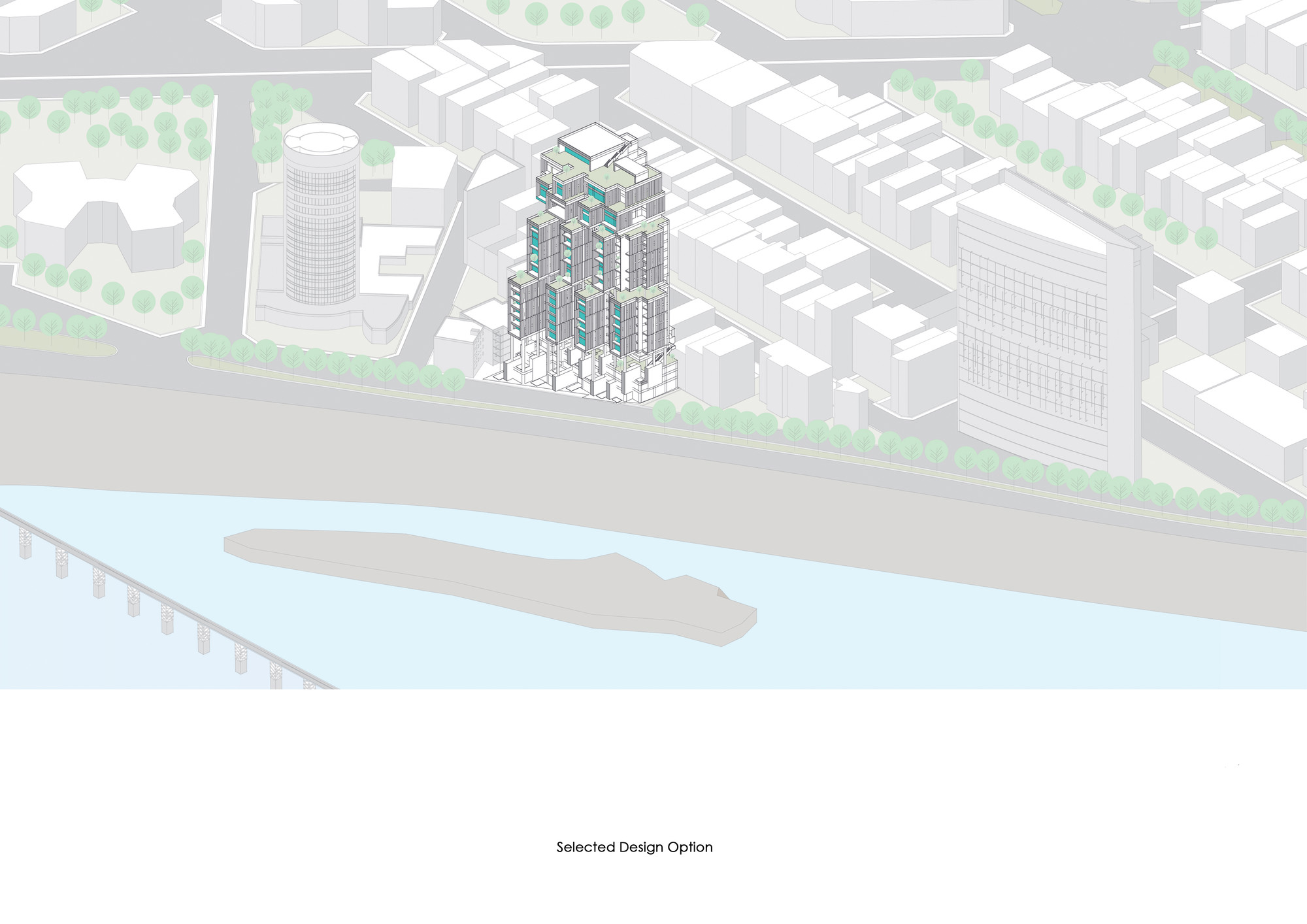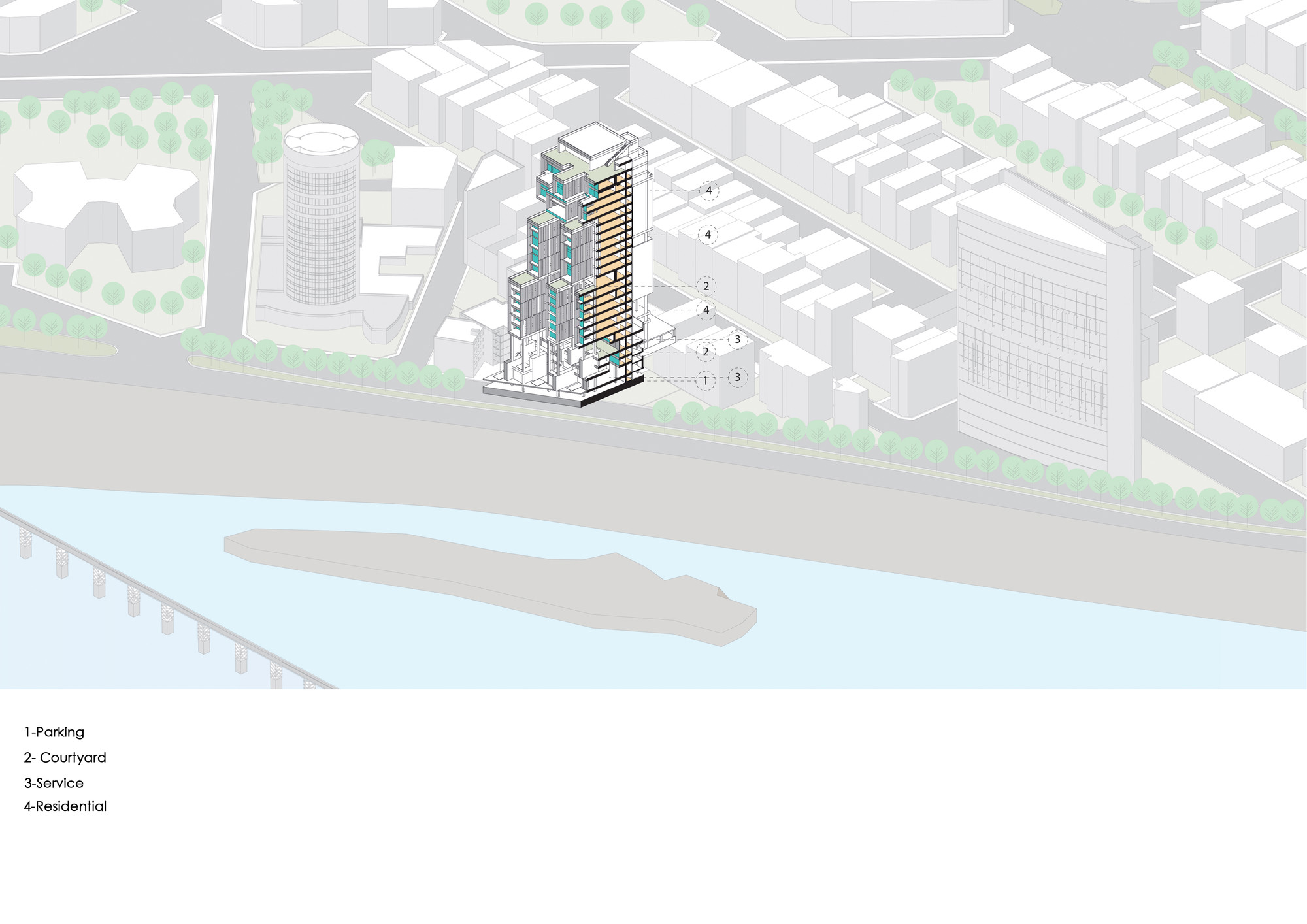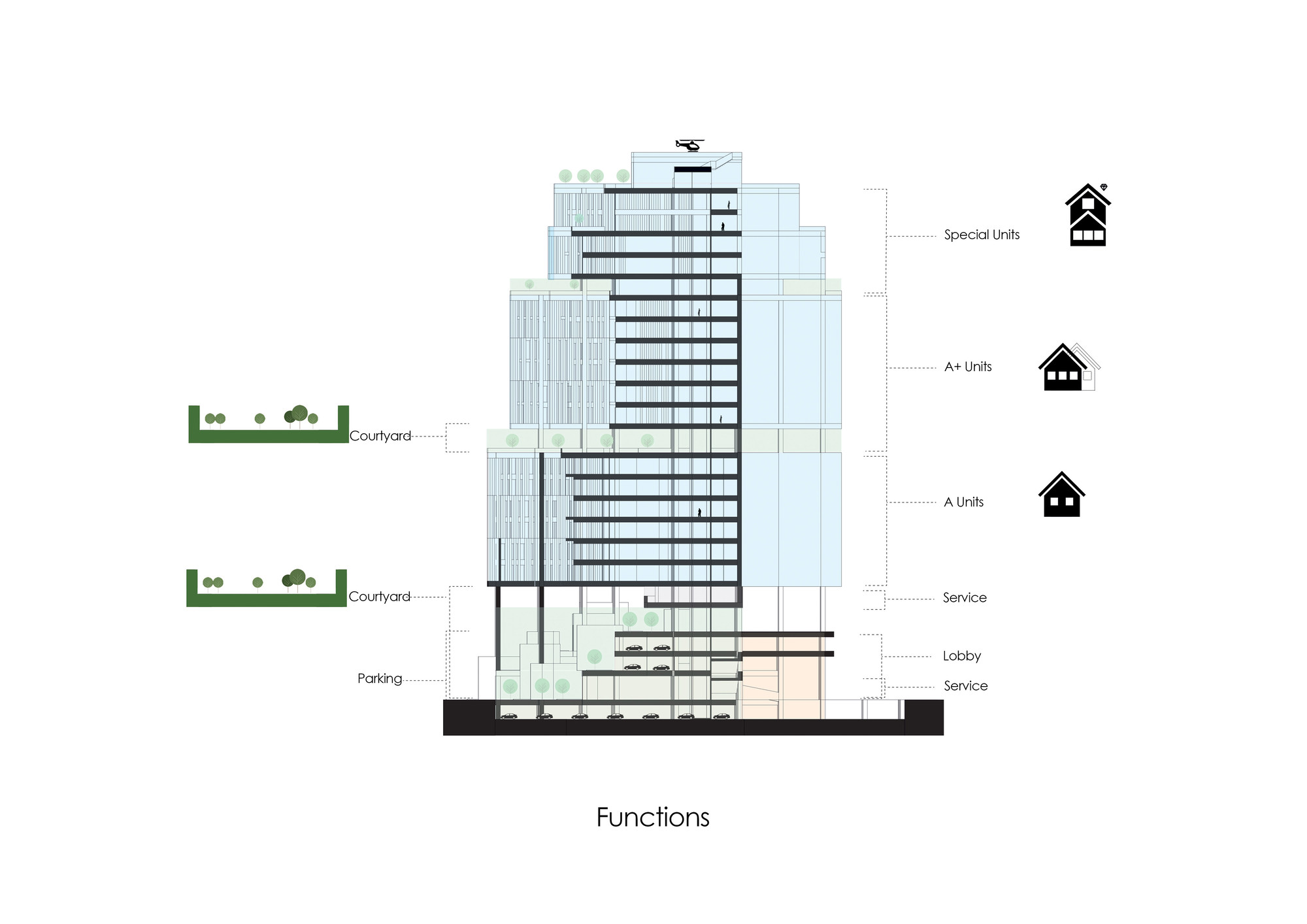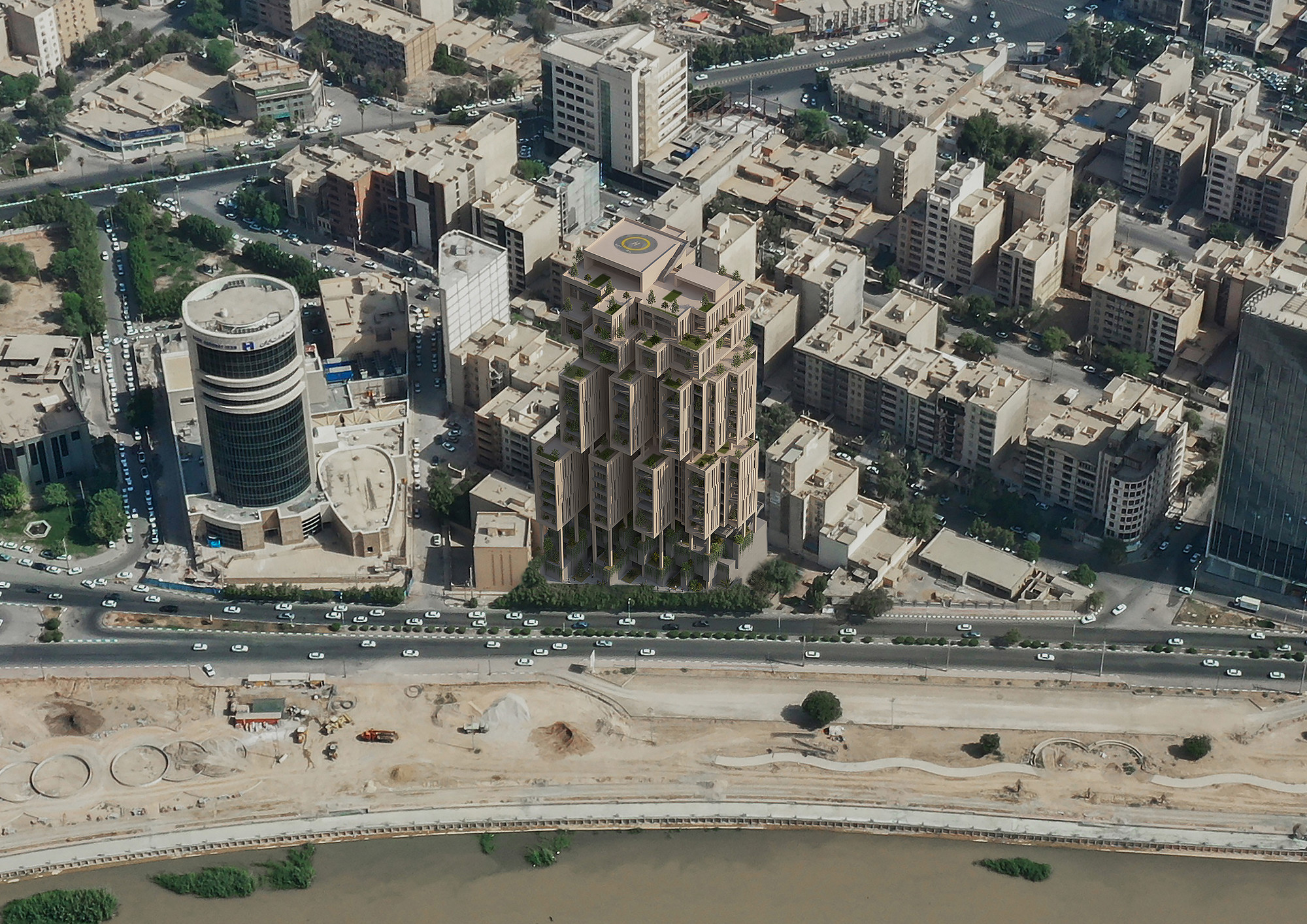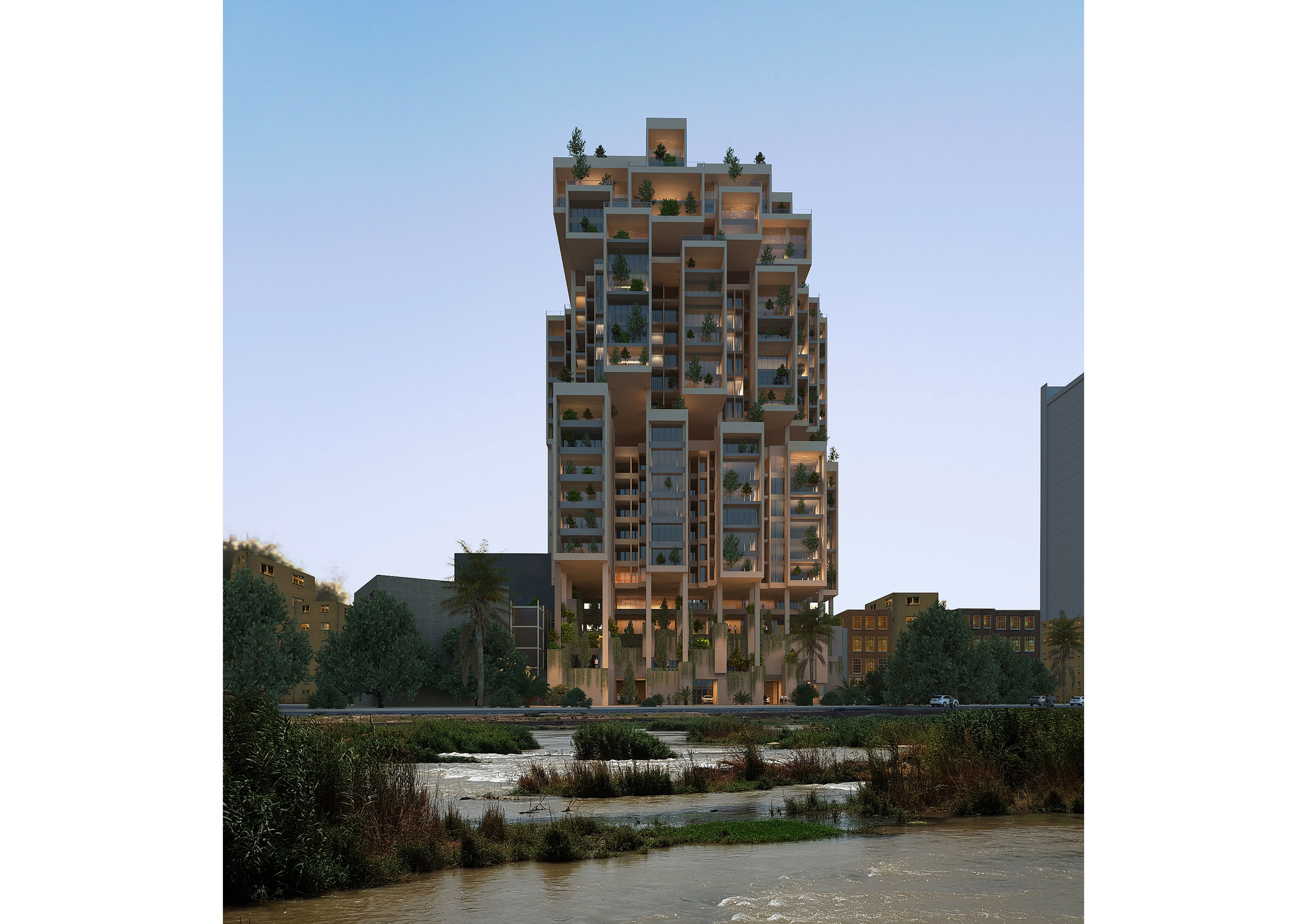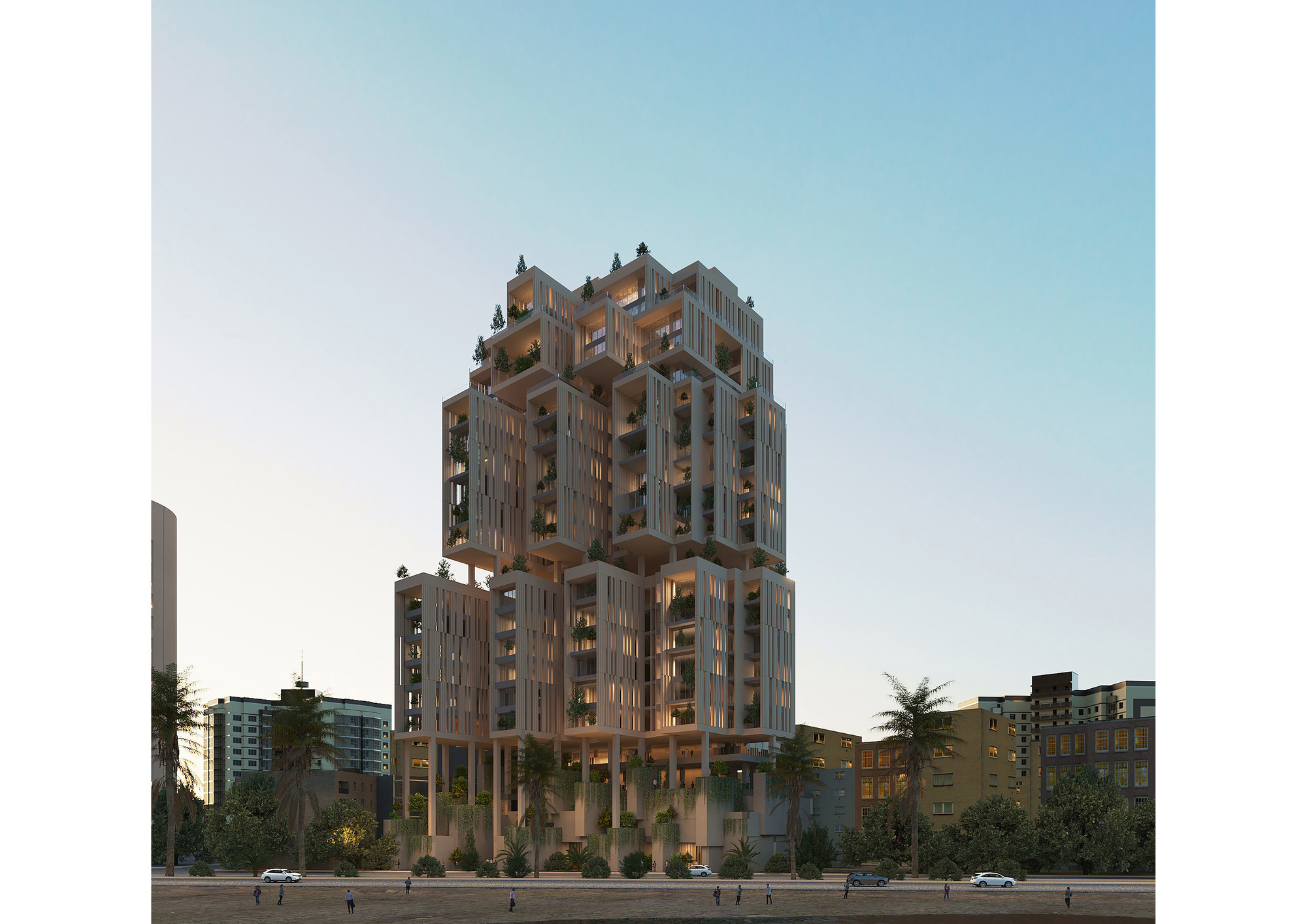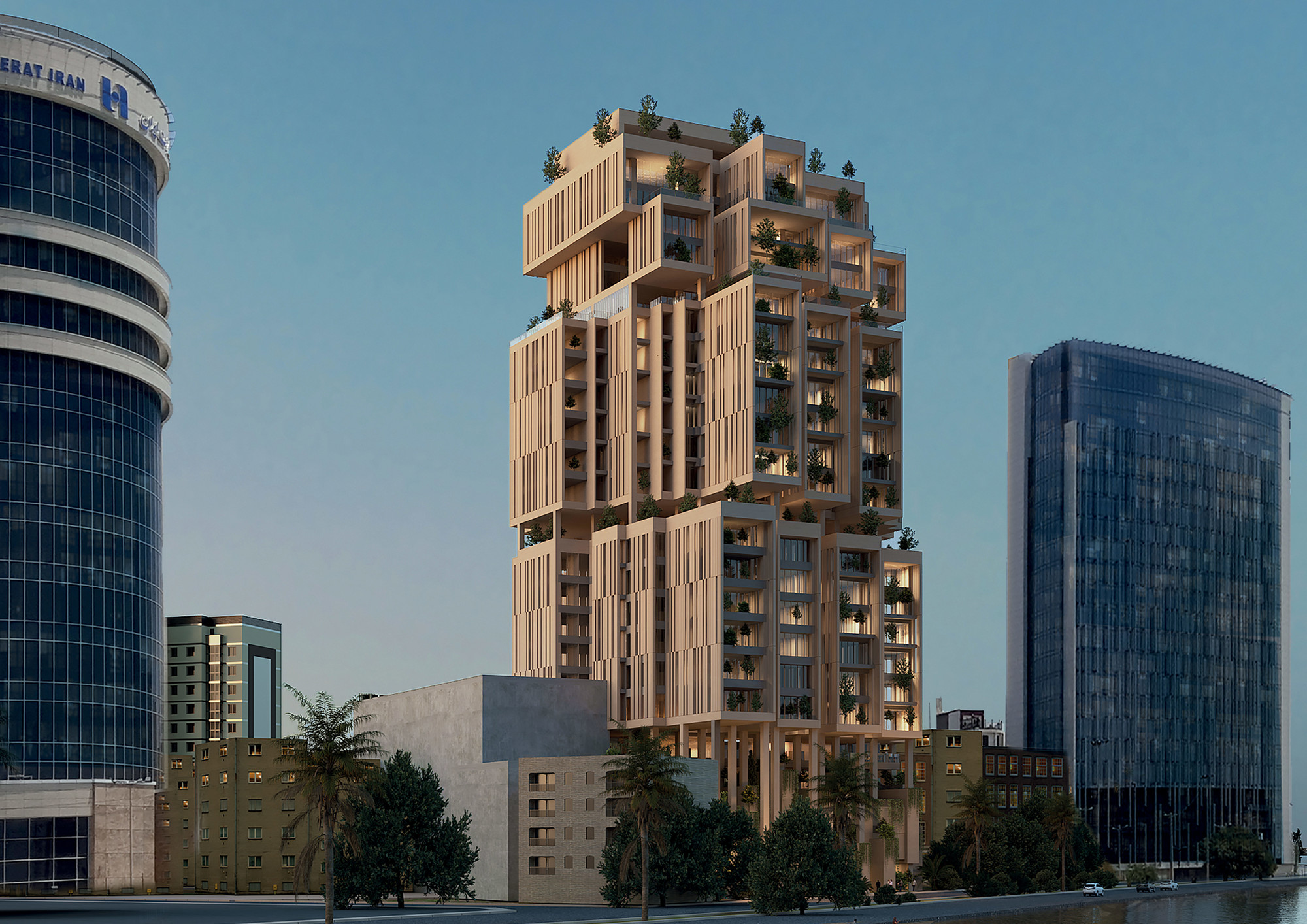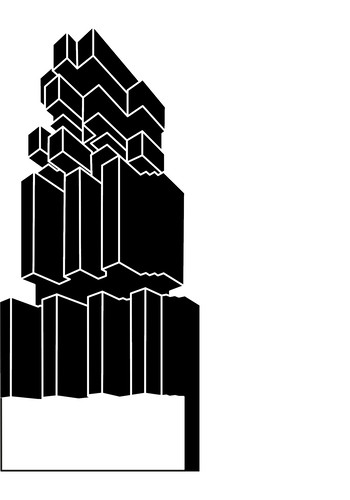

Saba Naft is a 22-floor residential building located in a 2750 m2 land adjacent to Karoon River in Ahvaz city. The required residential density was not logical in terms of the ratio of common open spaces to residential spaces. Therefore, one of the main aims of the project was to create open and semi-open common spaces in the form of yards for the entire project. Having in mind the technical regulations in Ahvaz which does not allow for more than one floor of underground parking, it was decided to create a landscape in combination with a parking lot for the project. The created landscape not only connects visually to the pedestrian path alongside the river, but also connects the residential yards to each other in the lower floors. Therefore, the parking mass on the three floors on the ground turned into a green shell on the exterior façade. The yards on these floors have turned into an open and semi-open space with natural breeze. The volume of the project was extended along the river side with the aim of maximizing view to the karoon River. As a combination of the regular geometry of the structure and the edge of the site, a stepped geometry was formed on this side of the building, increasing the light capturing surface by one and a half. The classification of unit areas and typologies were defined by the geometrical organization of the project and the different yards which separate the residential clusters from each other. Eventually, three levels of yards were defined with leisure-service function throughout the building, which not only satisfies the need for open spaces for a dense residential building, but also boosts natural ventilation through the building. Considering the hot climate of Ahvaz, the geometry of building on the façade is formed to maximize shading for the interior spaces. Three different unit typologies were organized in clusters of 6 floors between each two yards. The upper cluster is defined as villas with central courtyards and natural breeze. The volumetric organization, structural modules, and the walls separating the units, follow the same organization and geometrical grid. Washed cement was used as the solo material on the façade, and the color was selected in harmony with the soil of the region.