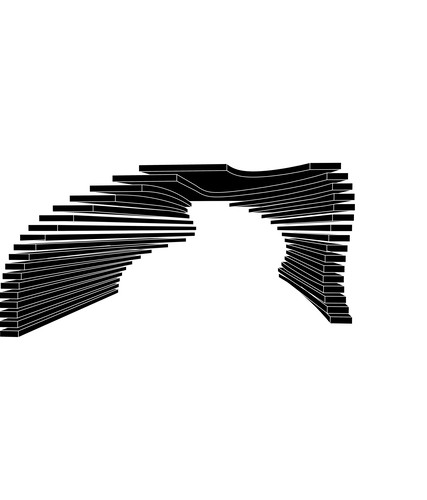
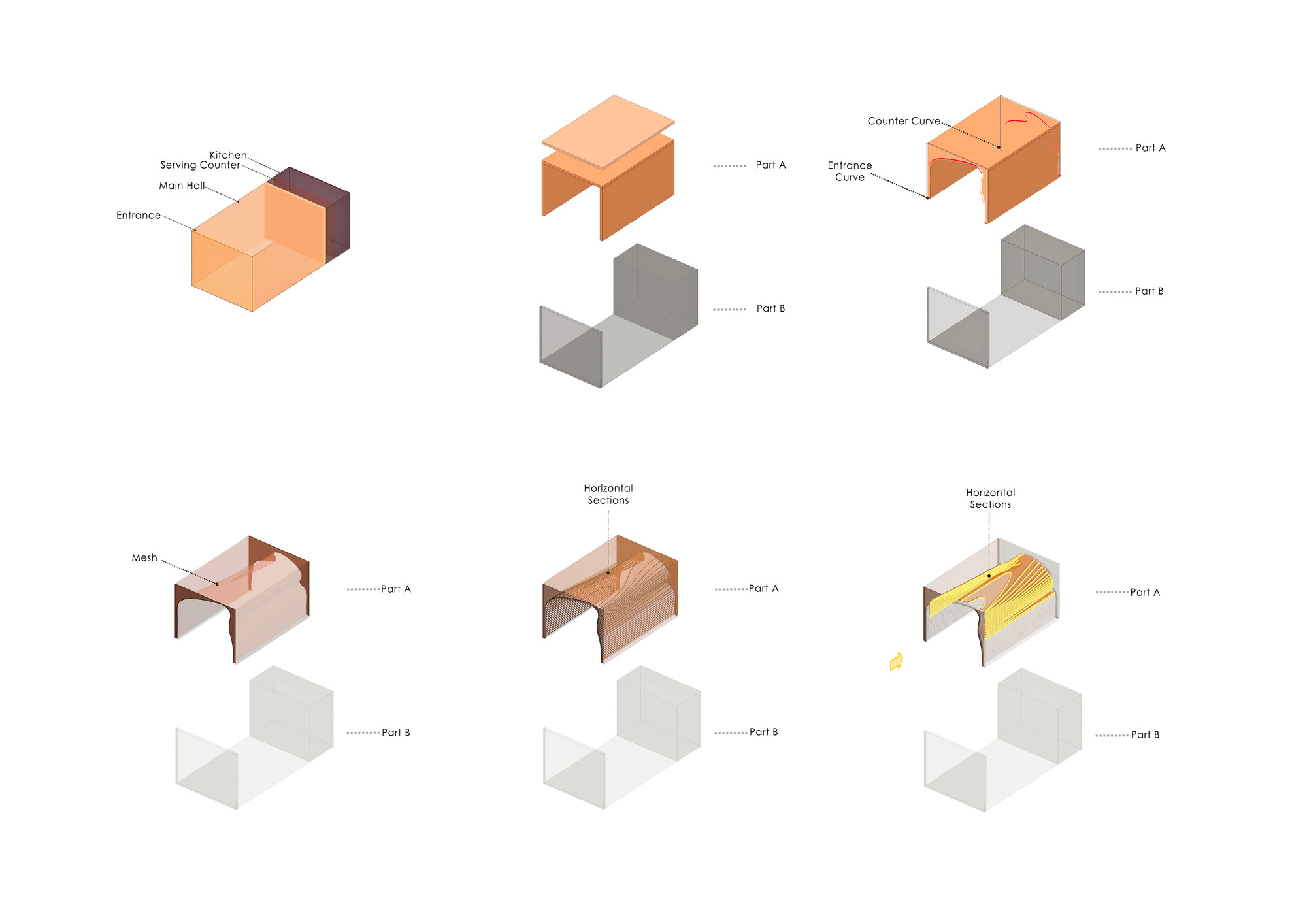
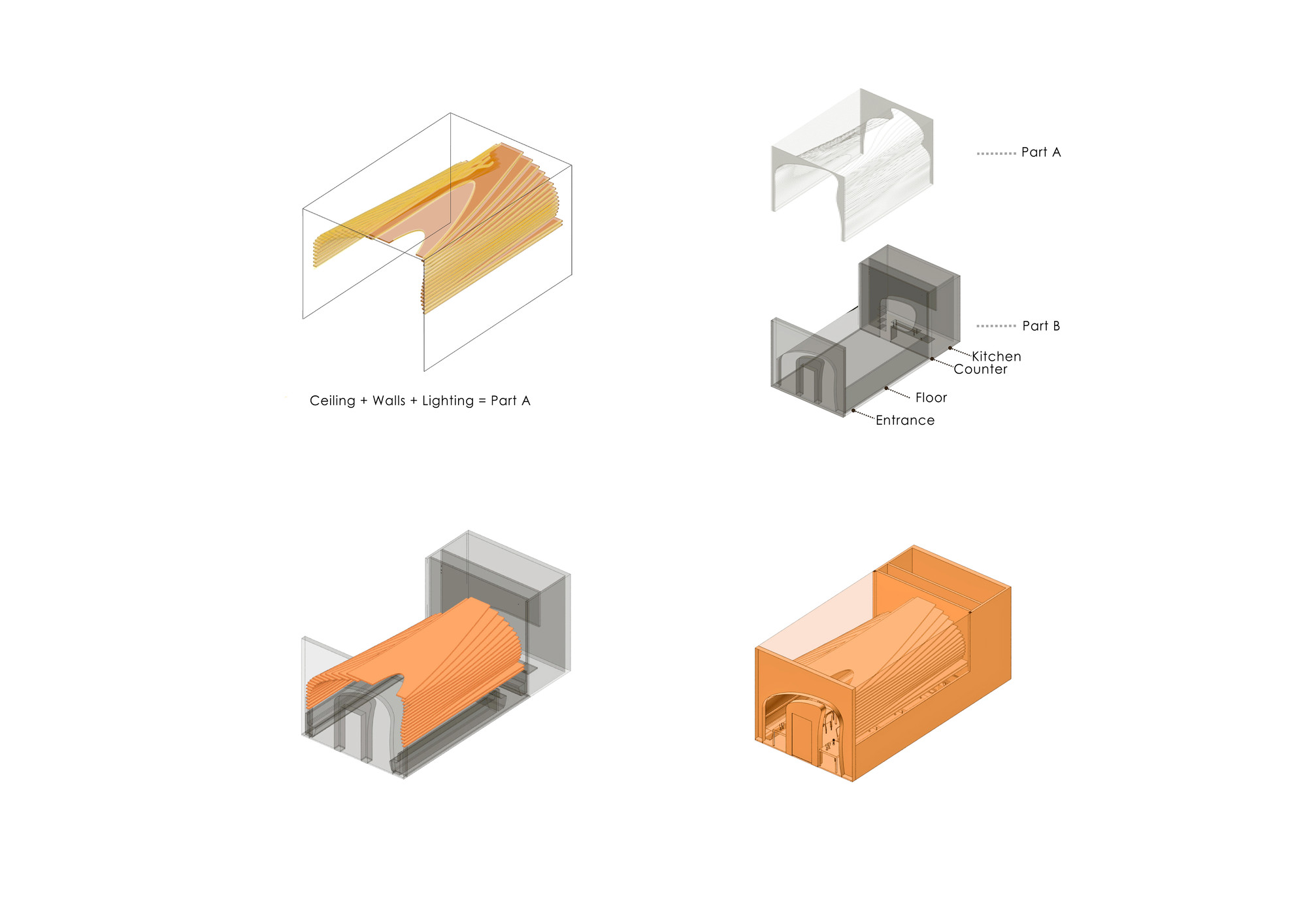
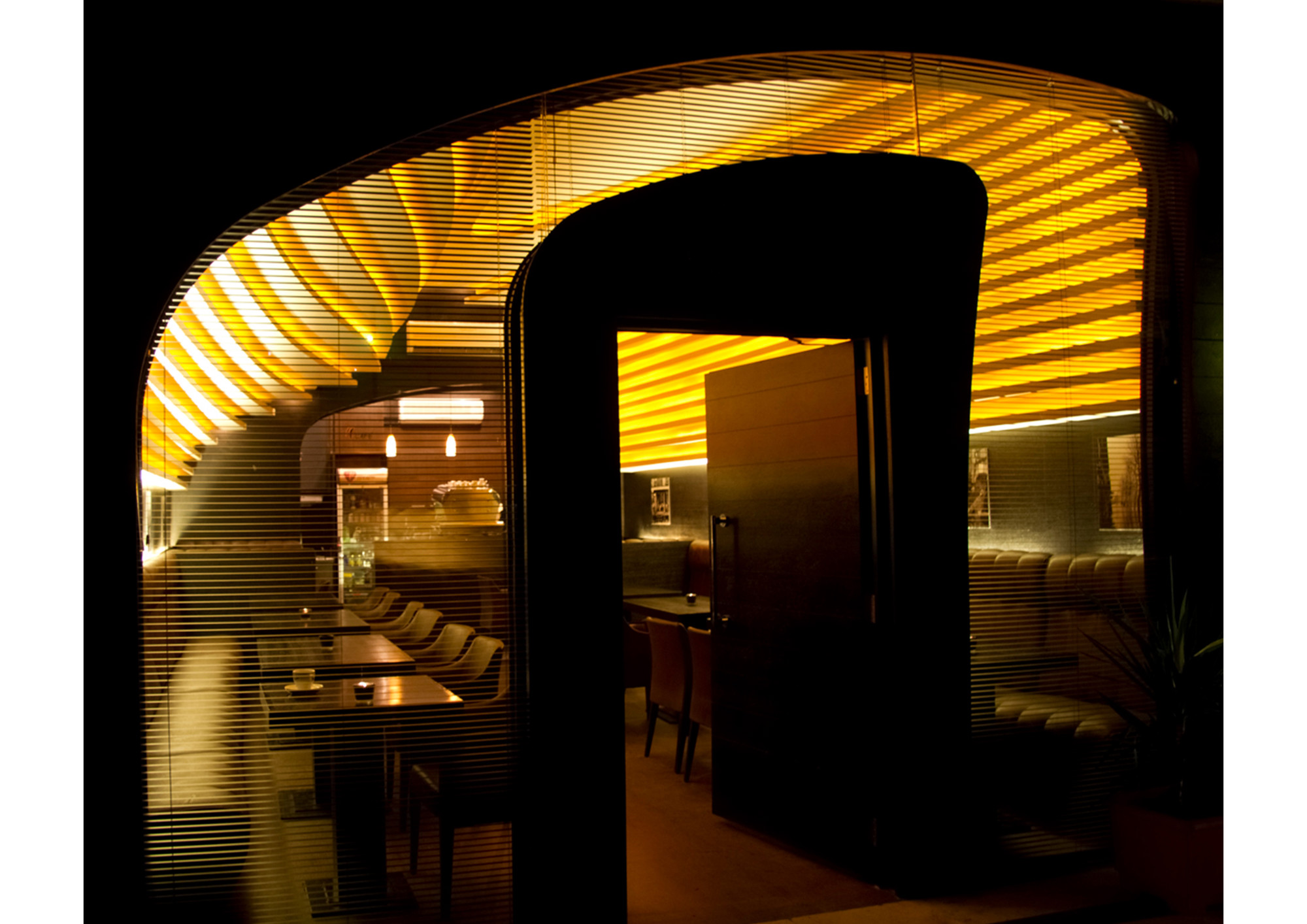
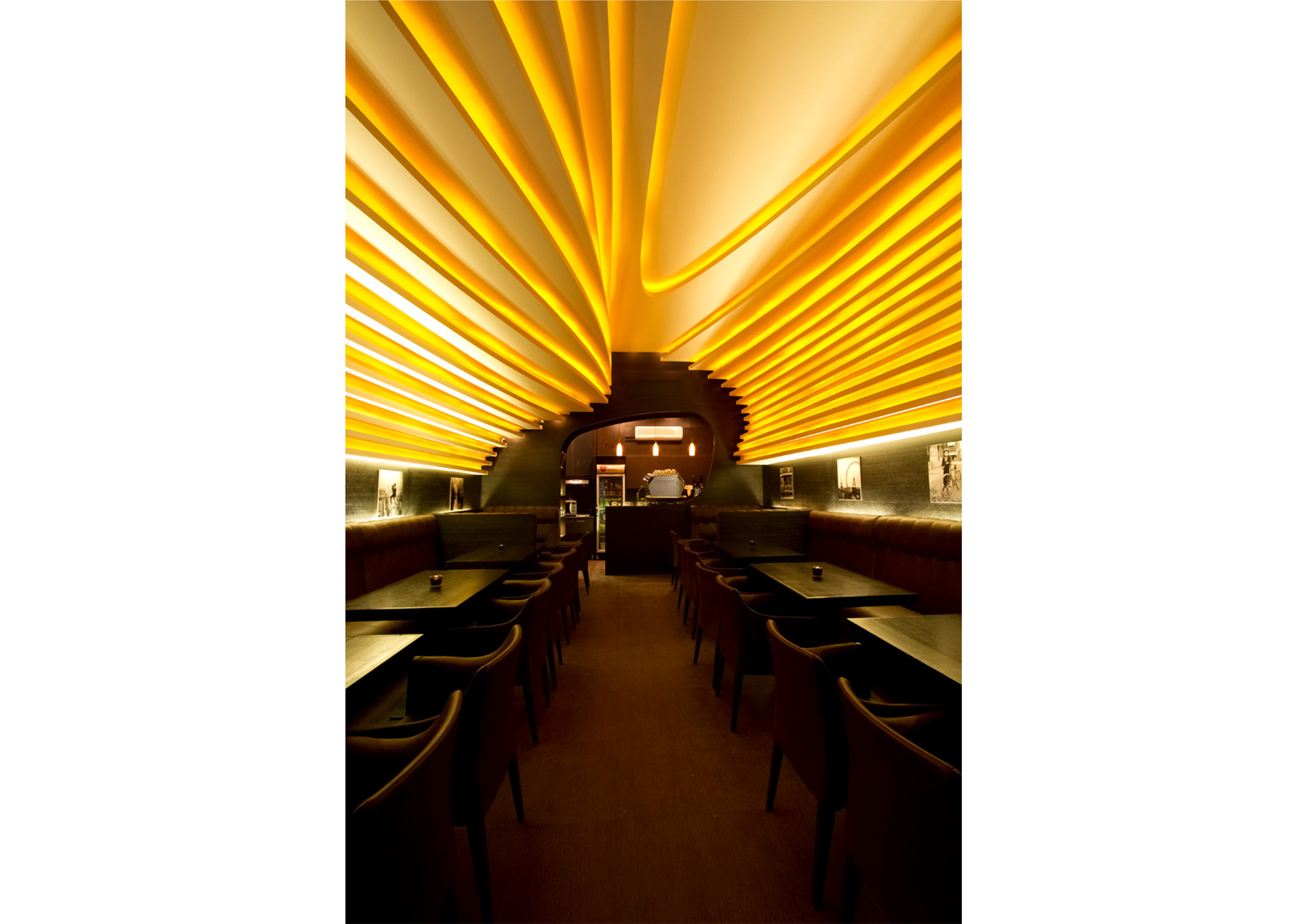
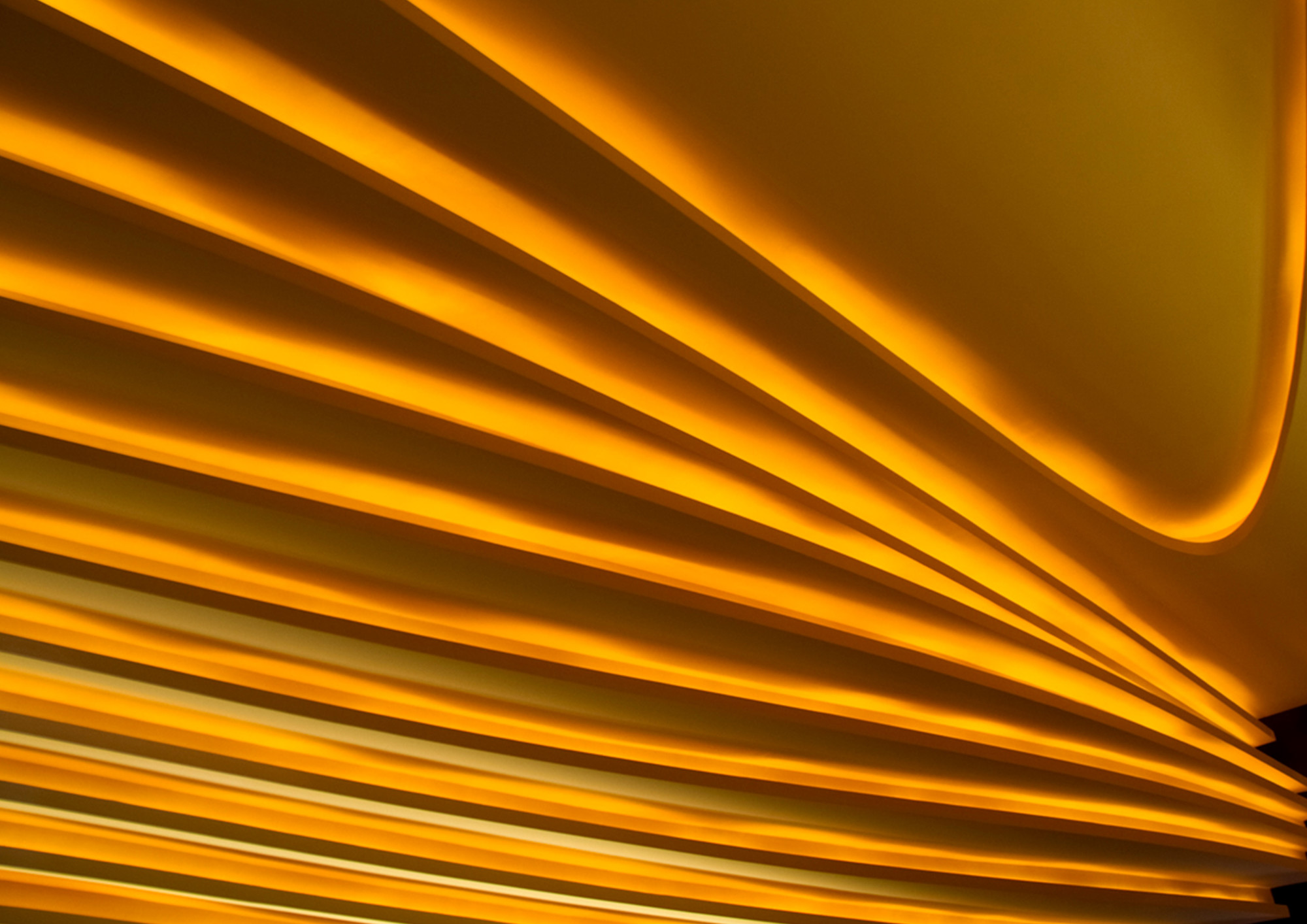
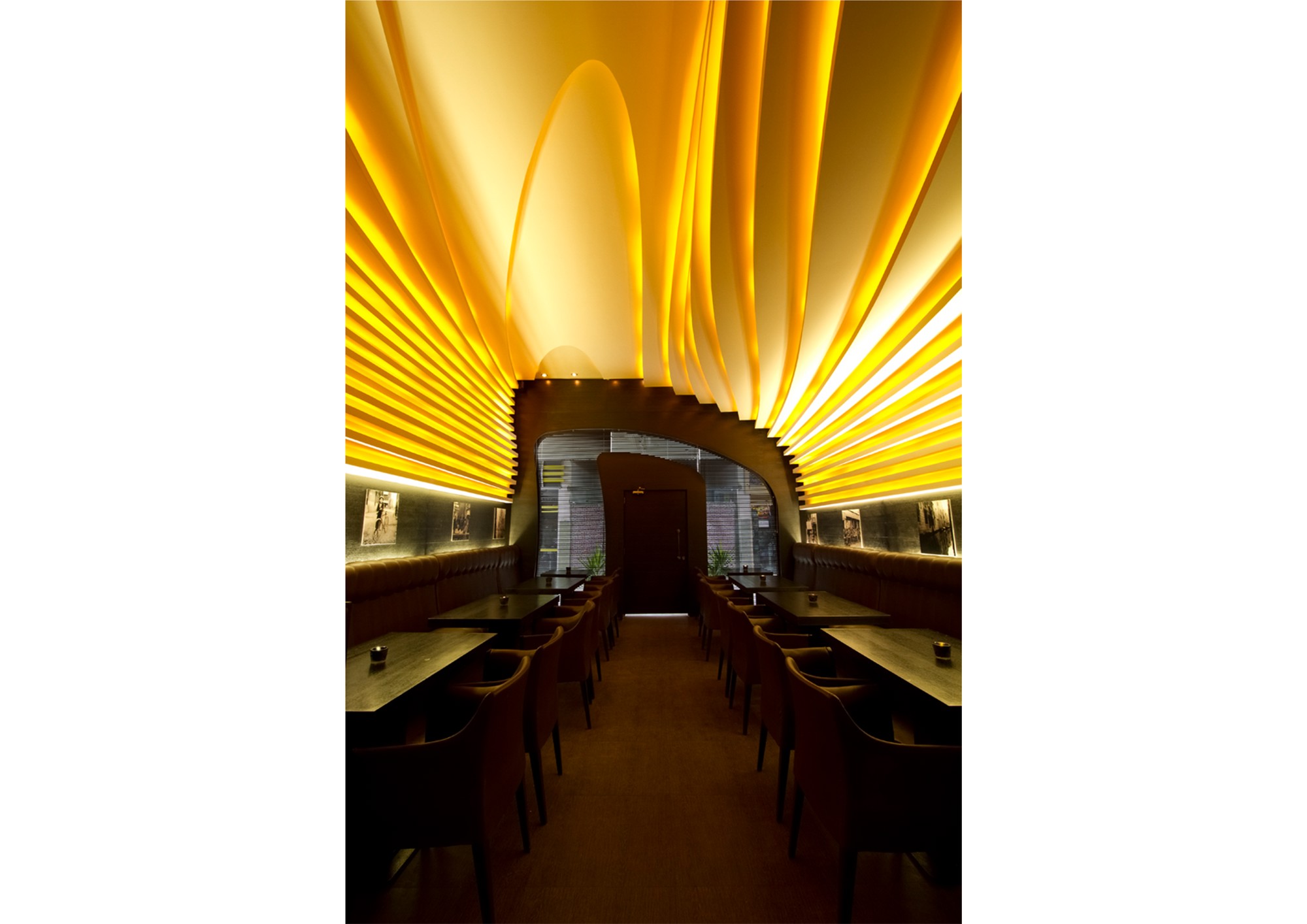
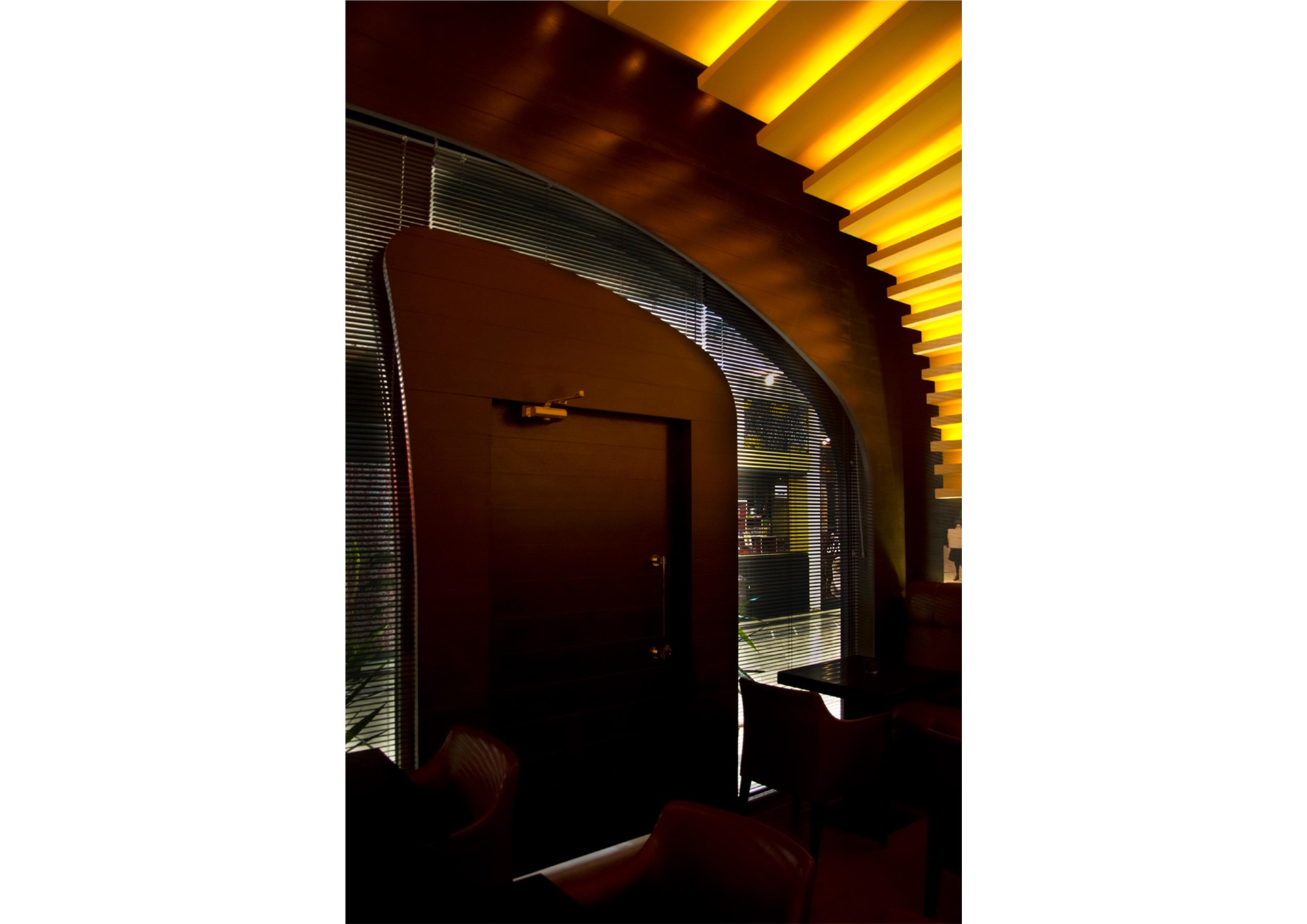
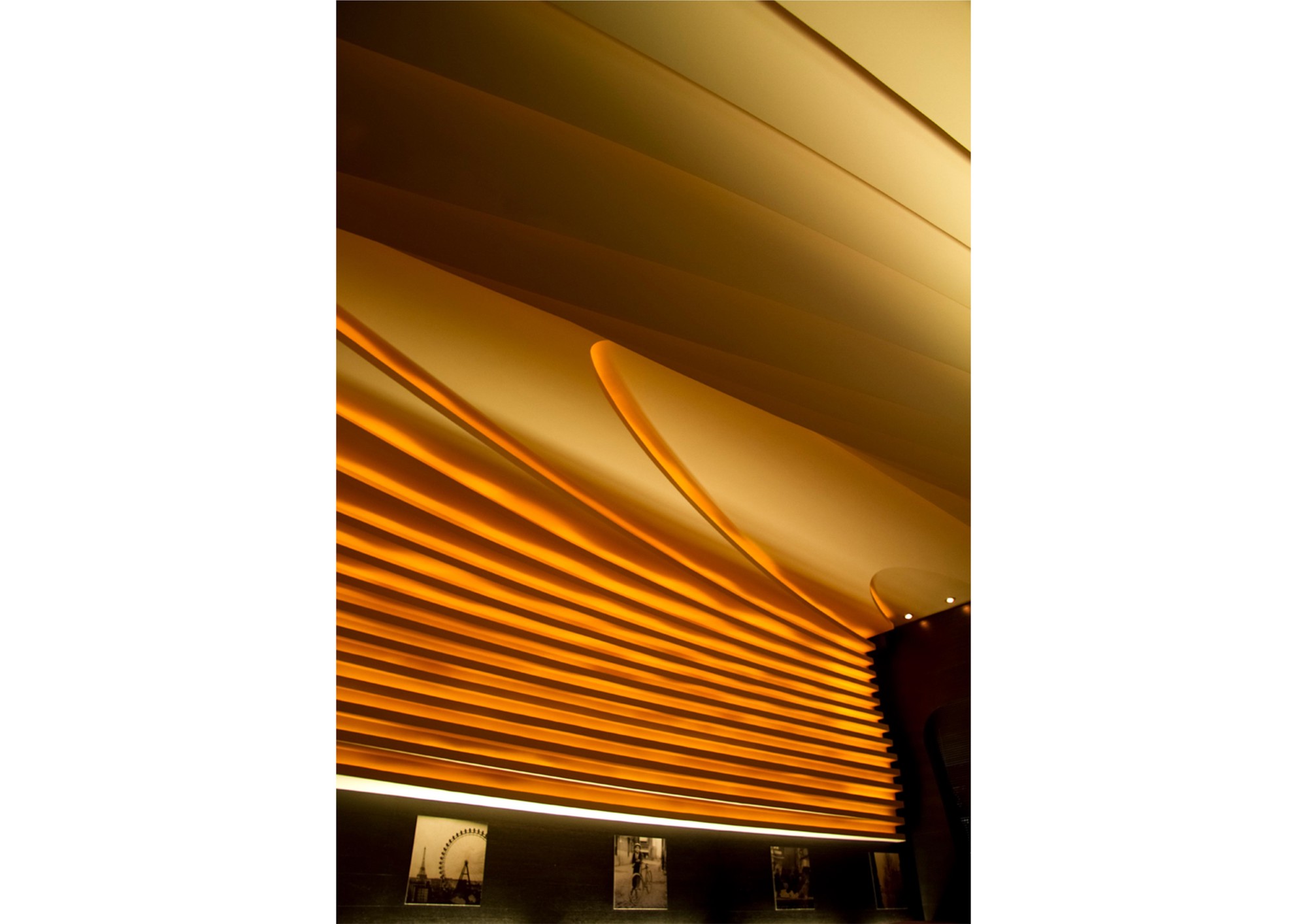
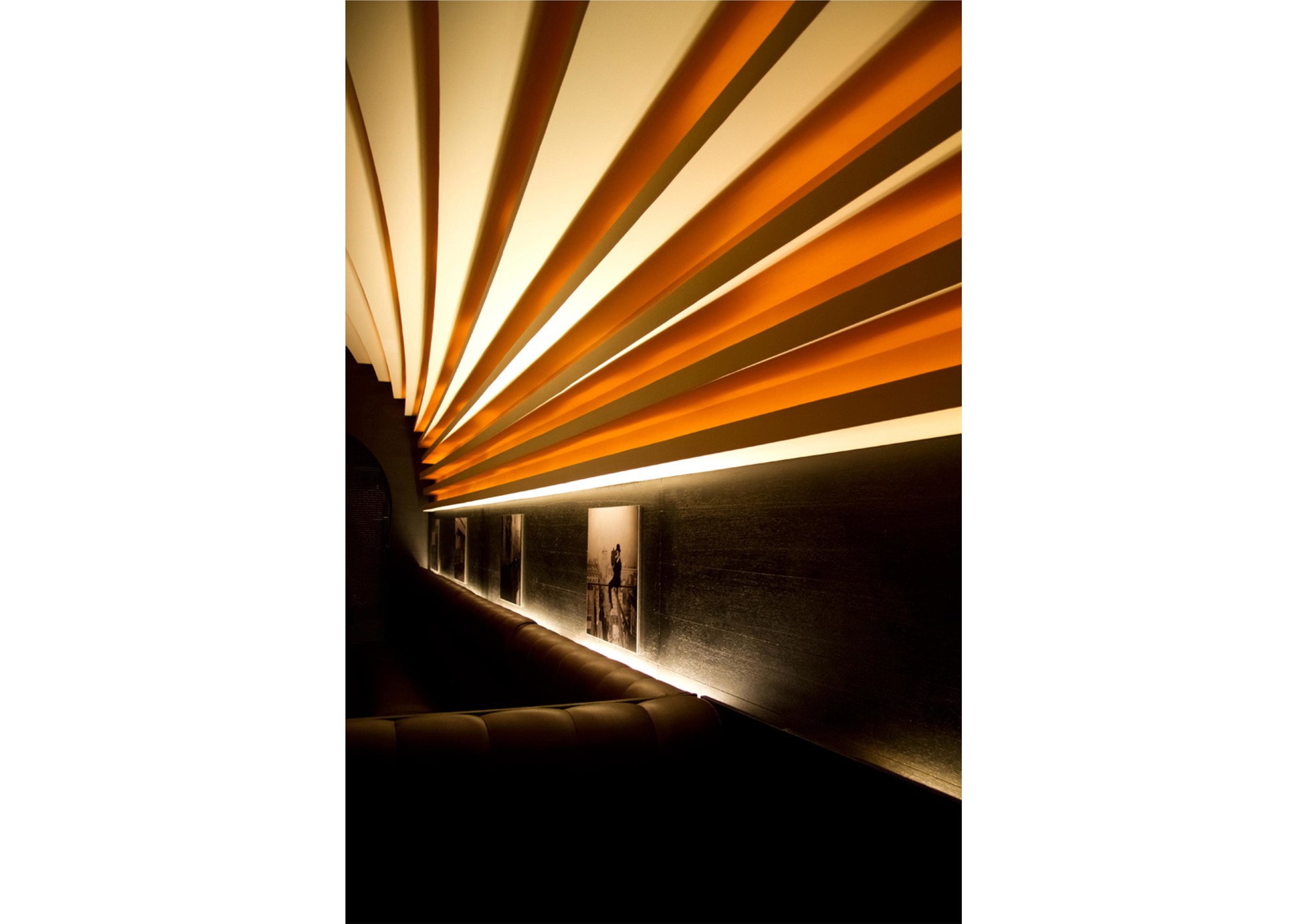
Coffee shop culture is an emerging trend among young Iranians. Most of the youth consider at least one or two of these places as their favourite cozy and comfortable corner to escape from the chaotic city life. With an area of 52 m2, the site of this project was located at the second floor of a two storey shopping mall in Tehran. The primary concern of the client was to have a unique design while keeping the cost at a reasonable range. Having that in mind, the design attempt was to create a distinct character for the coffee shop through a simple and consistent design. Design Criteria: • The primary challenge here was to control the amount of reverberation in the limited volume of the space (4.5m in Height). • The second consideration was to create a dynamic space which provides the customers with a unique experience in every perspective. • Another important design factor was to preserve uniformity in design and to create an integrated space in terms of form and material. • Finally, it was essential to keep the construction process simple and easy to conduct and to choose reasonably priced and easily available construction materials. In terms of function, the project could be divided into two main parts, the kitchen and the main hall. In terms of the architectural elements, on the other hand, the two categories are: A. The north-south wall, and the ceiling B. The east-west wall, the back wall, the entrance, and the flooring In part A, the intention was to integrate the walls, the ceiling, and the lighting system into a consistent form created by the morphing of two curves. The resulting 3-Dimensional surface was then transformed into cross sectional layers. This transition not only makes the implementation easier, but also increases the noise absorption by multiplying the surface area. LED strip lights were then implemented within the layers, creating a calming indirect lighting for the dining area. In order to reduce the construction cost, all the cross sections were plotted one to one. The aluminum frames were then bended accordingly, covered with a layer of plaster, and coated with acrylic paint. The final cost of the material and the construction of the ceiling and wall layers turned out much less than most of the common construction methods. For part B the material selection was limited to the dark brown wood and leather used to form most of the interior elements including the entrance wall, the floor, the furniture, the counter, and the kitchen area. The shape of the entrance and the counter wall was formed by the two curves of part A. Parts A and B complement each other to form the cubical space of the project. The material and color palettes were kept simple to better highlight the main idea and the lighting quality of the project.