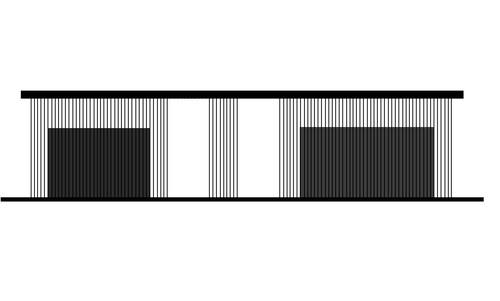
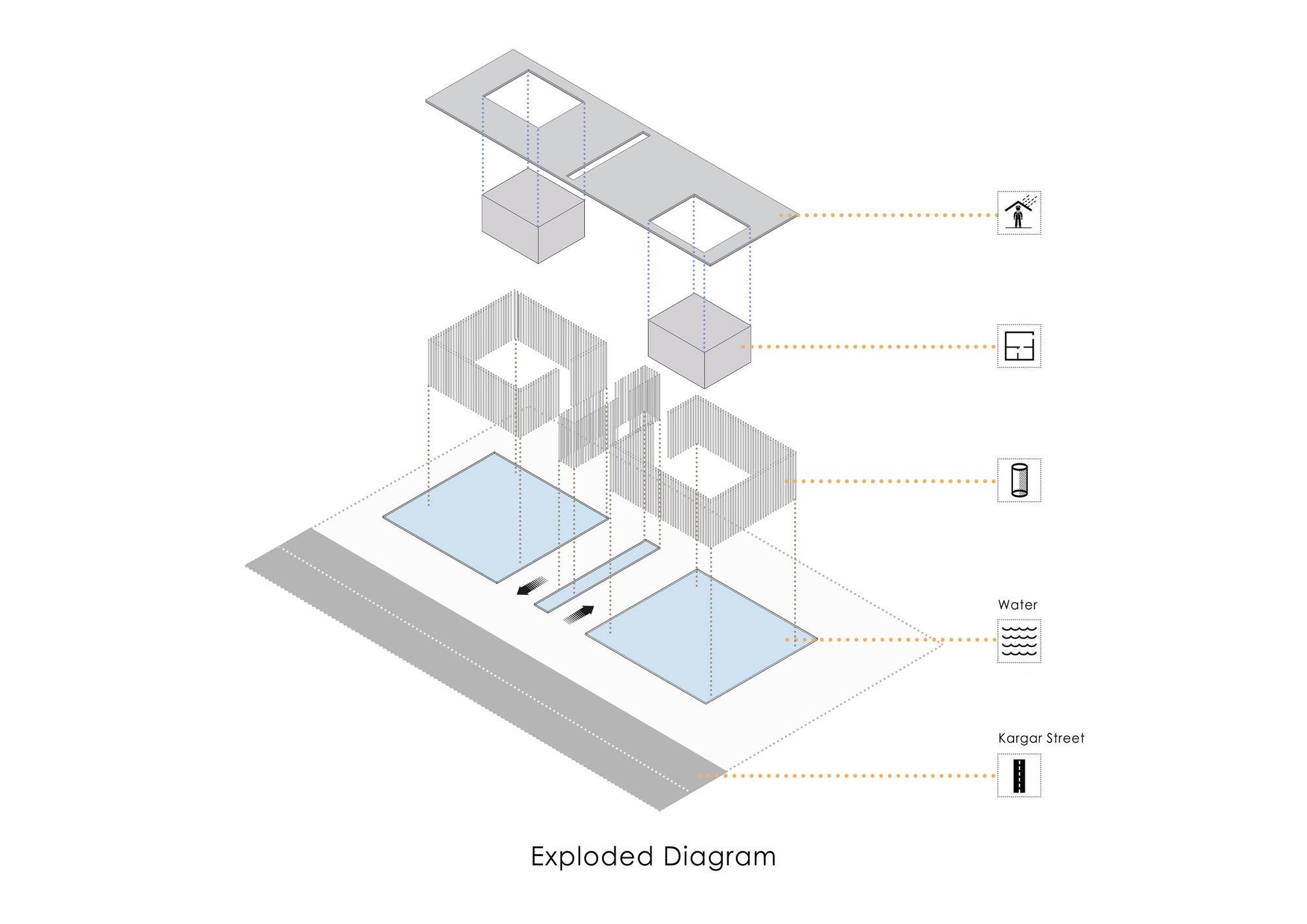
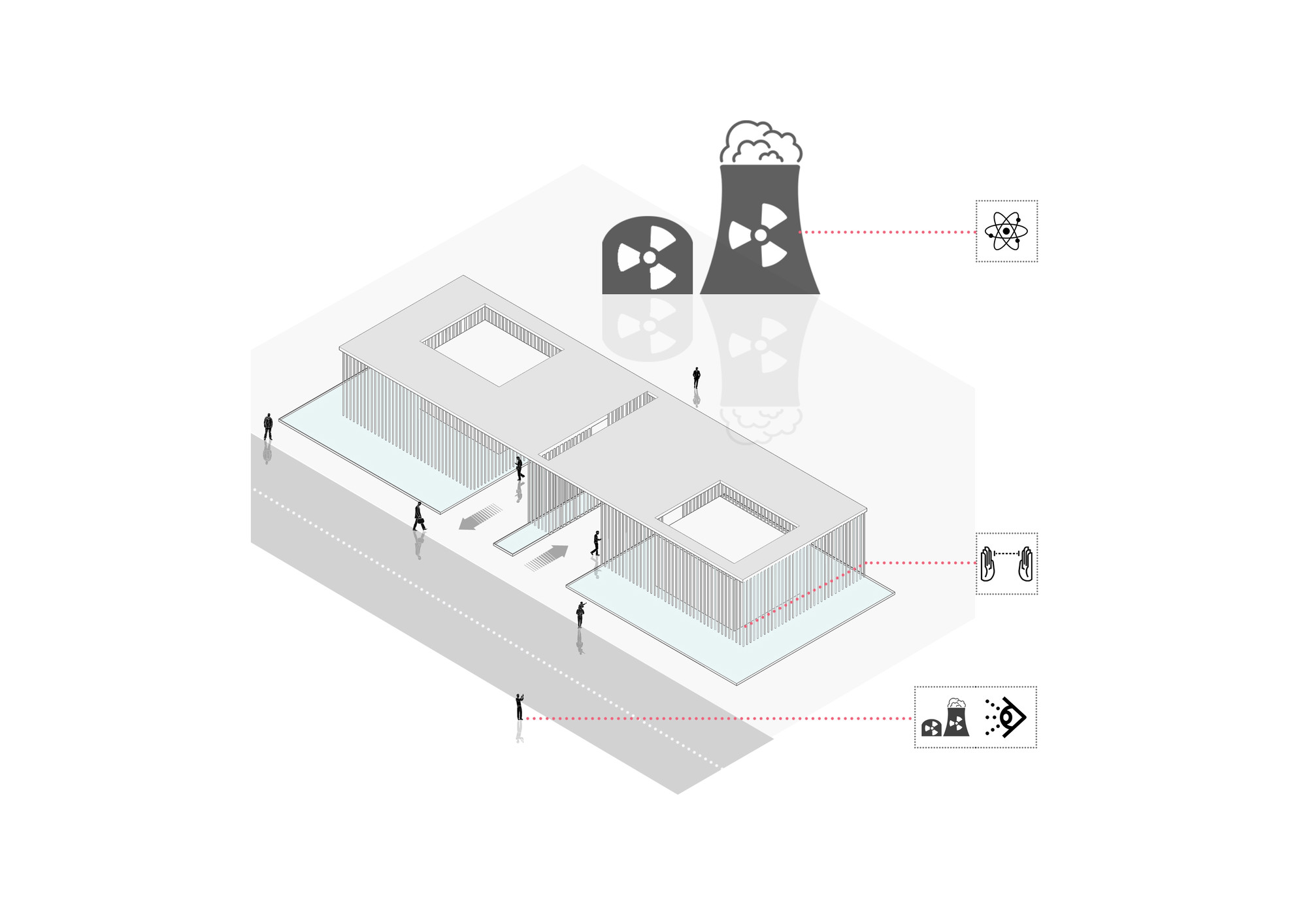
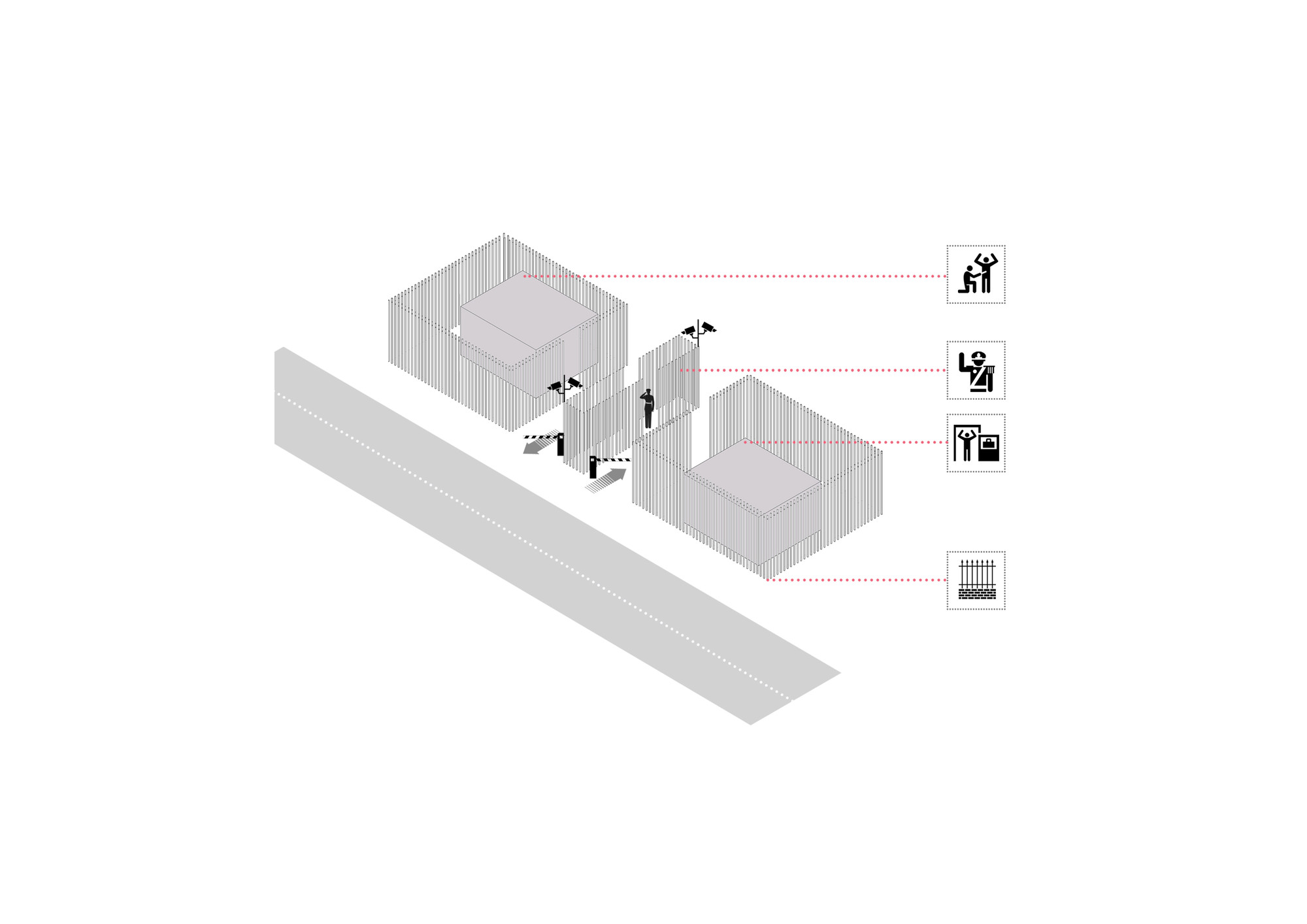
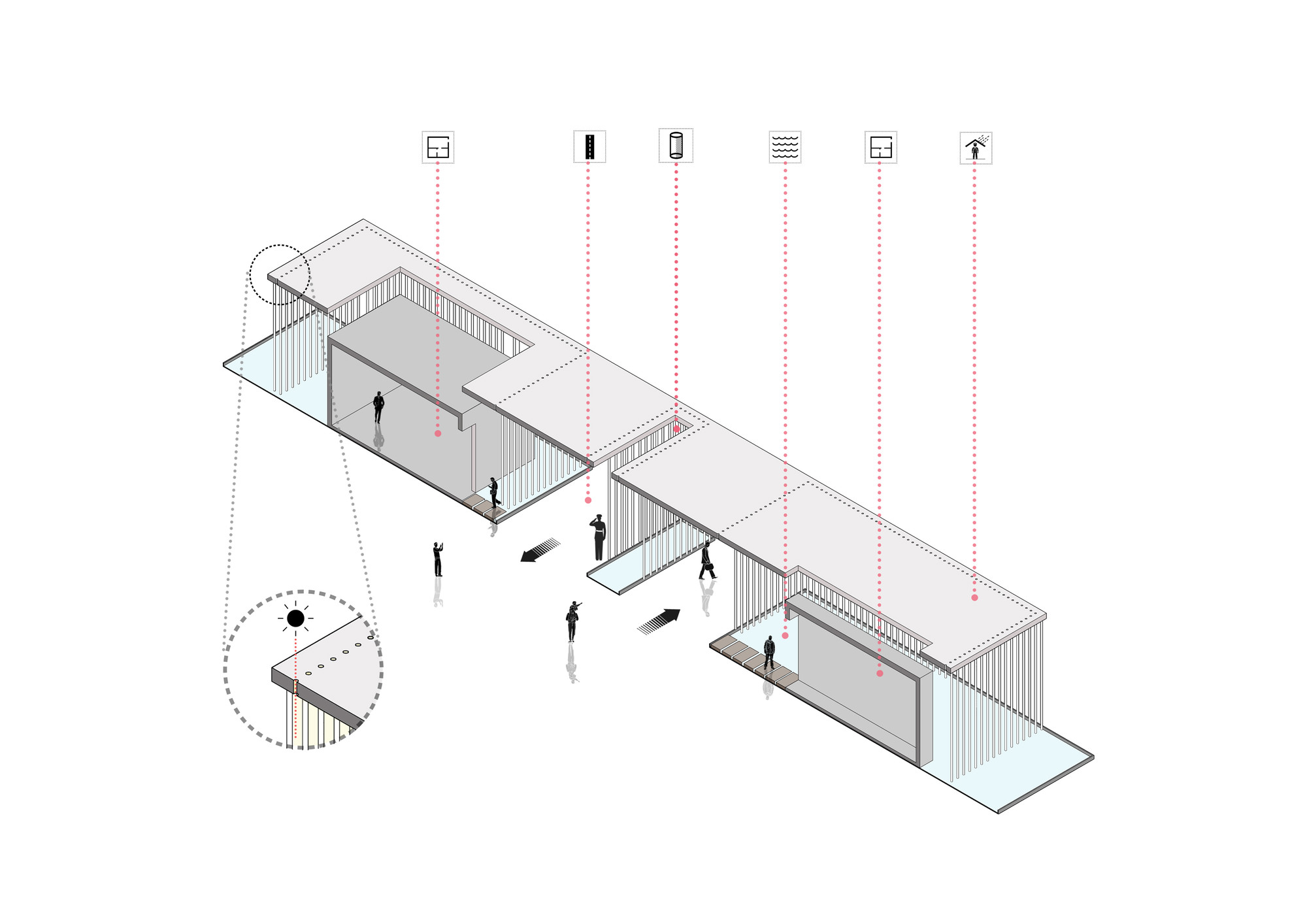
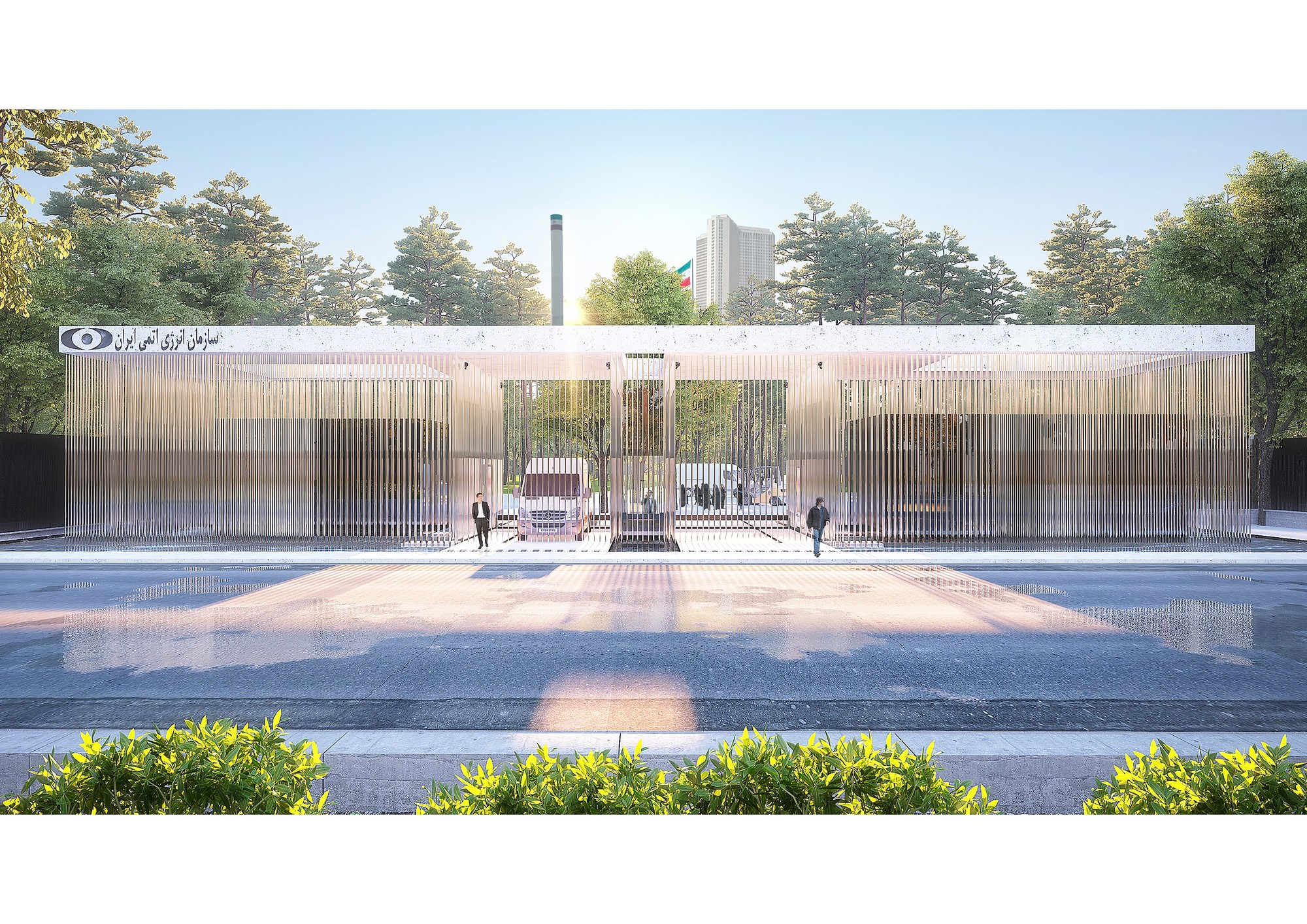
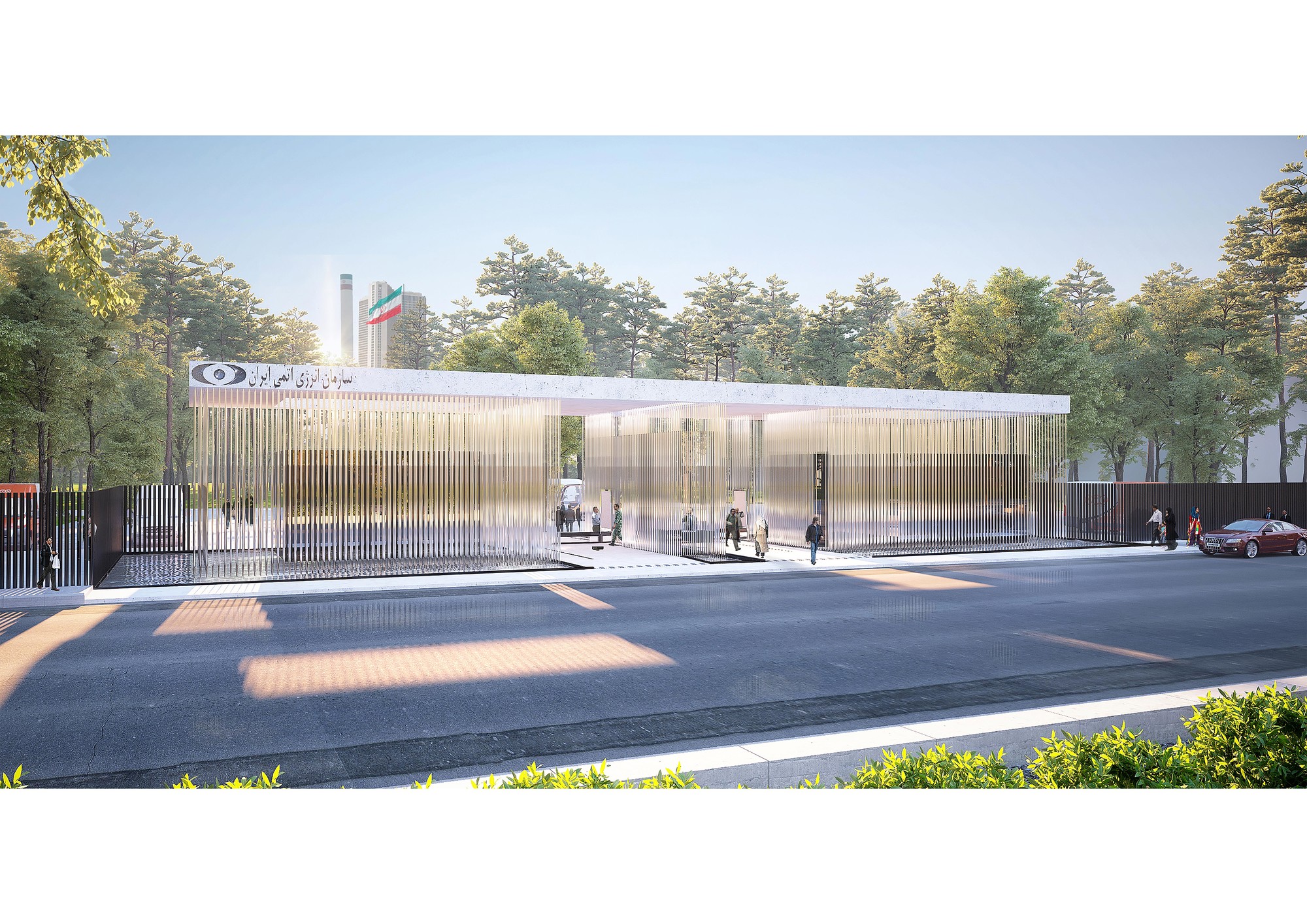
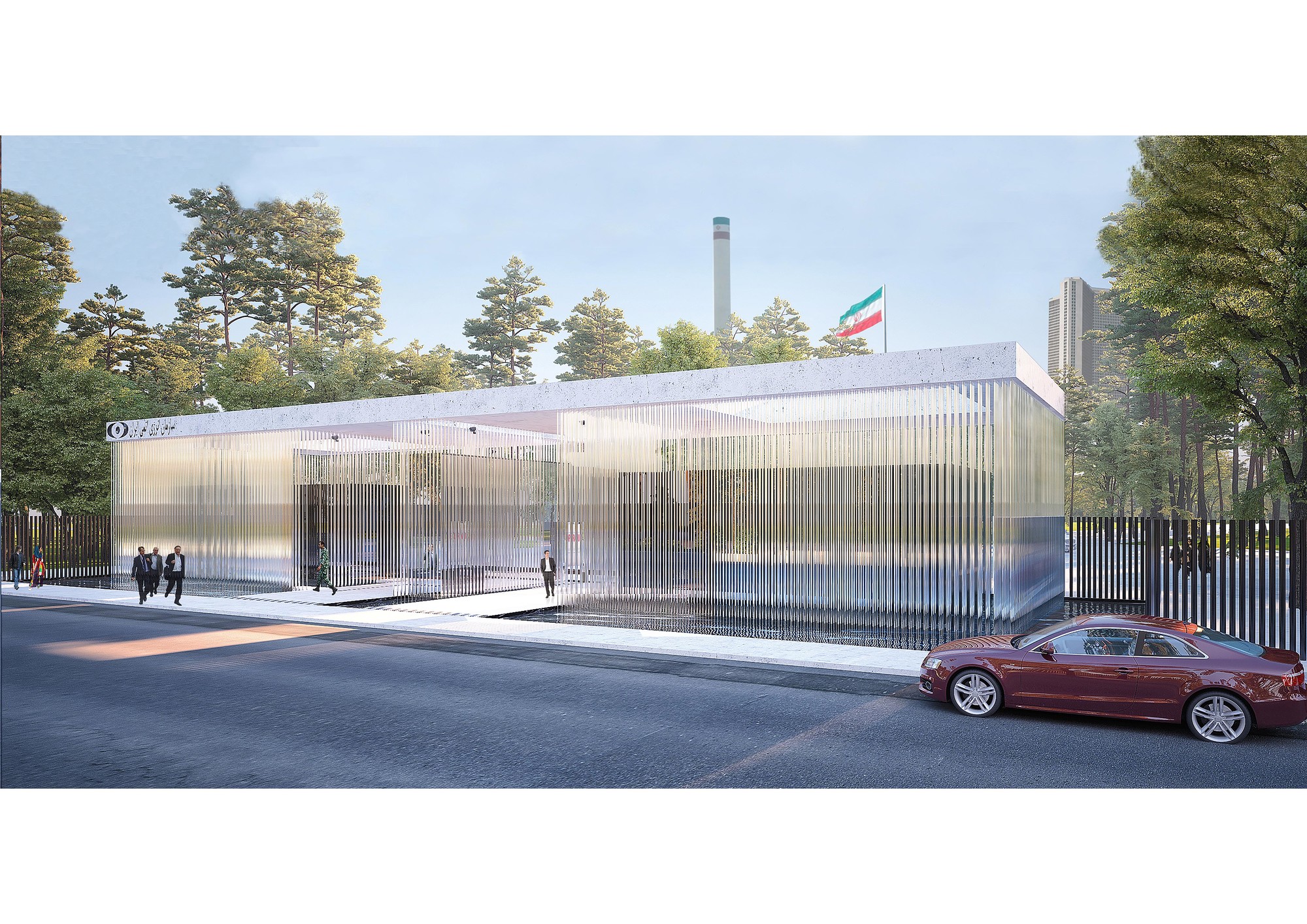
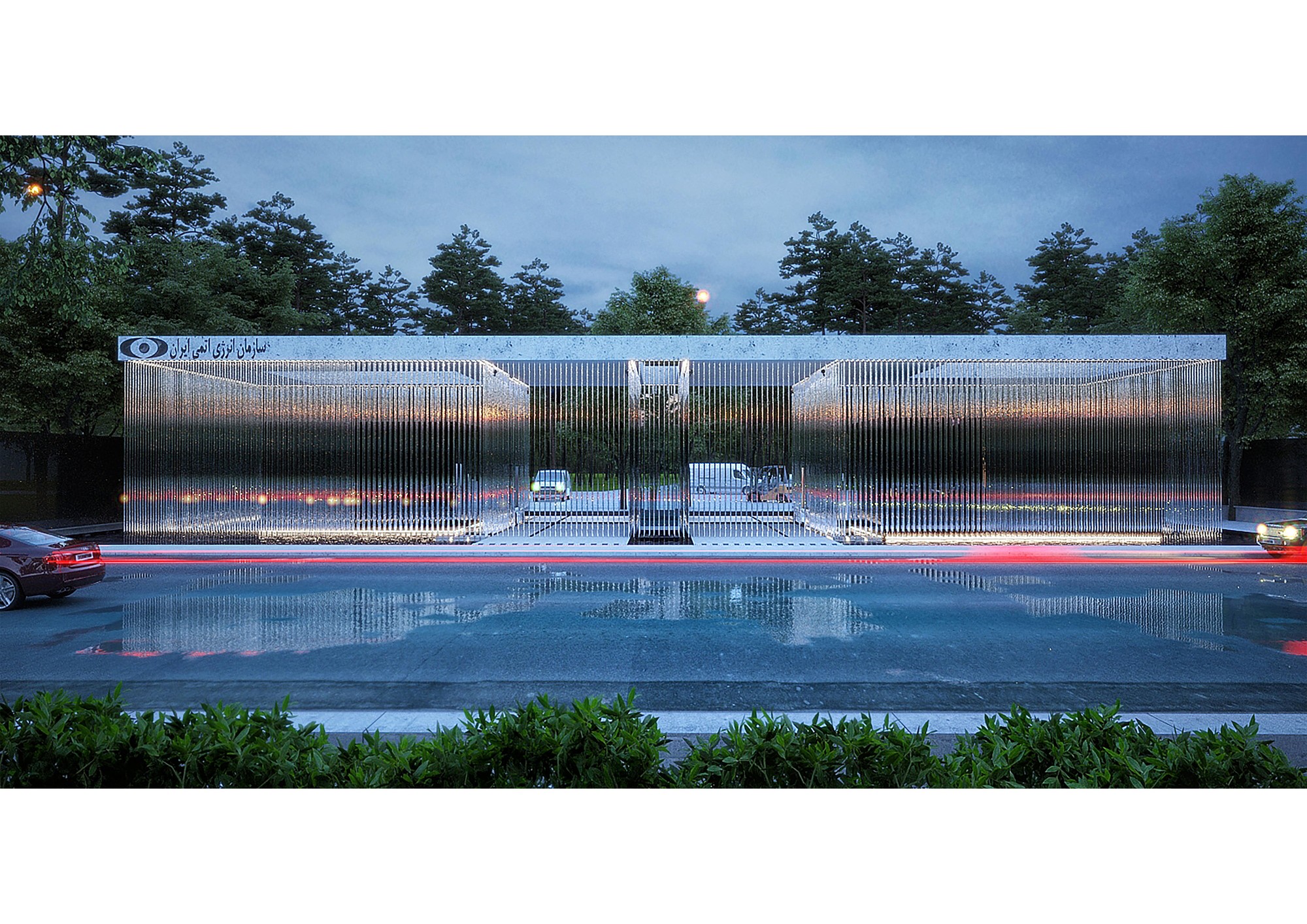
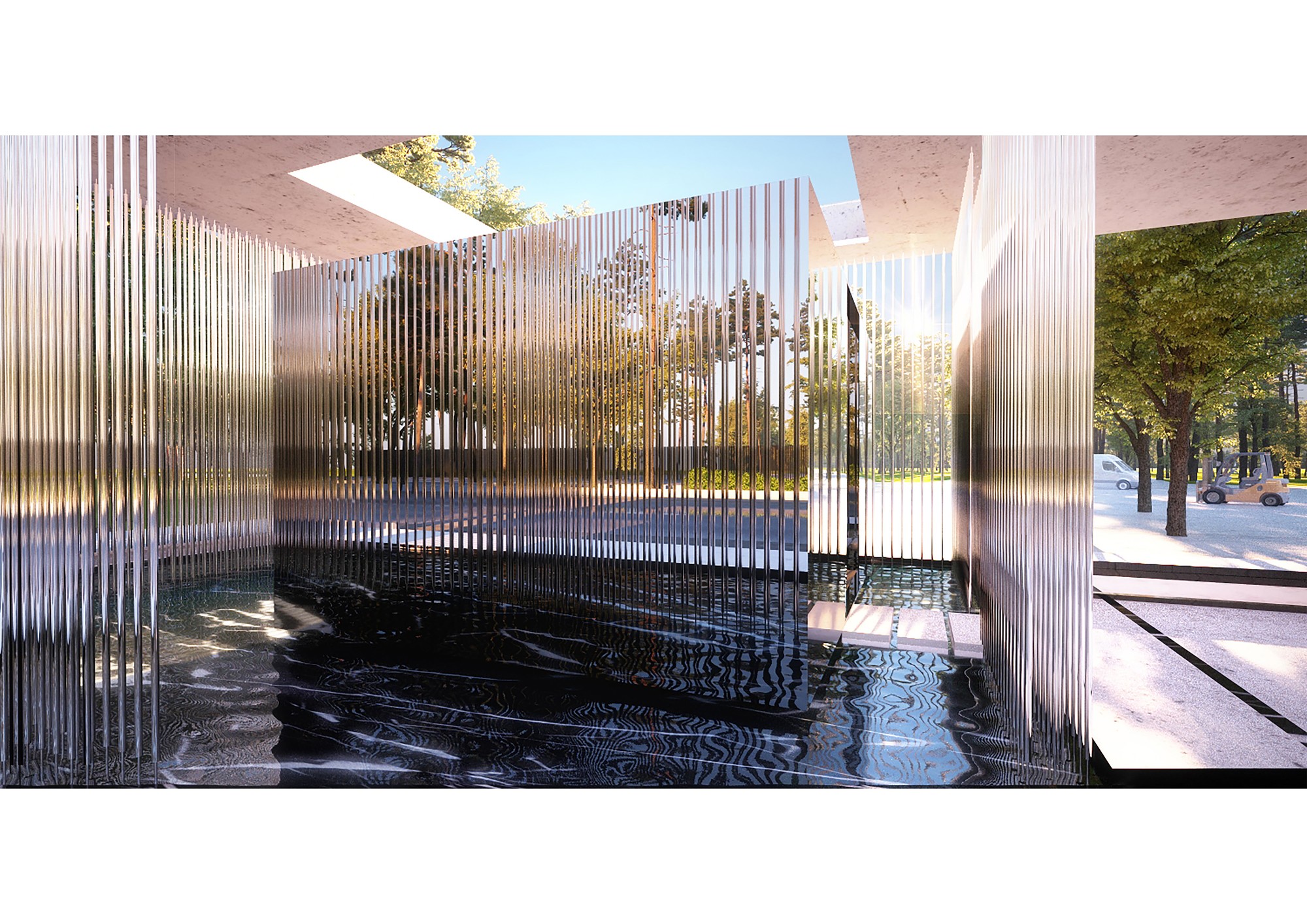
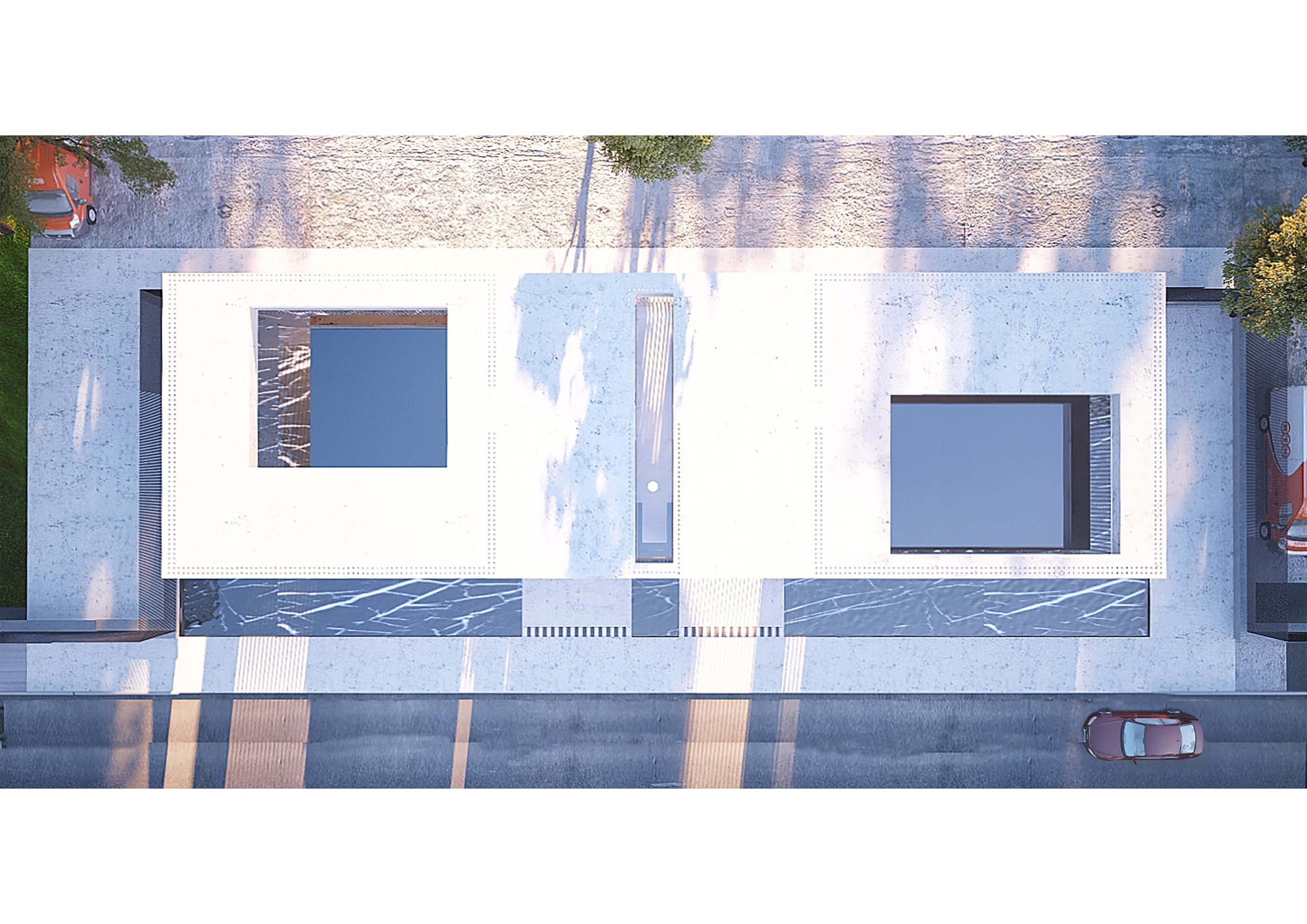
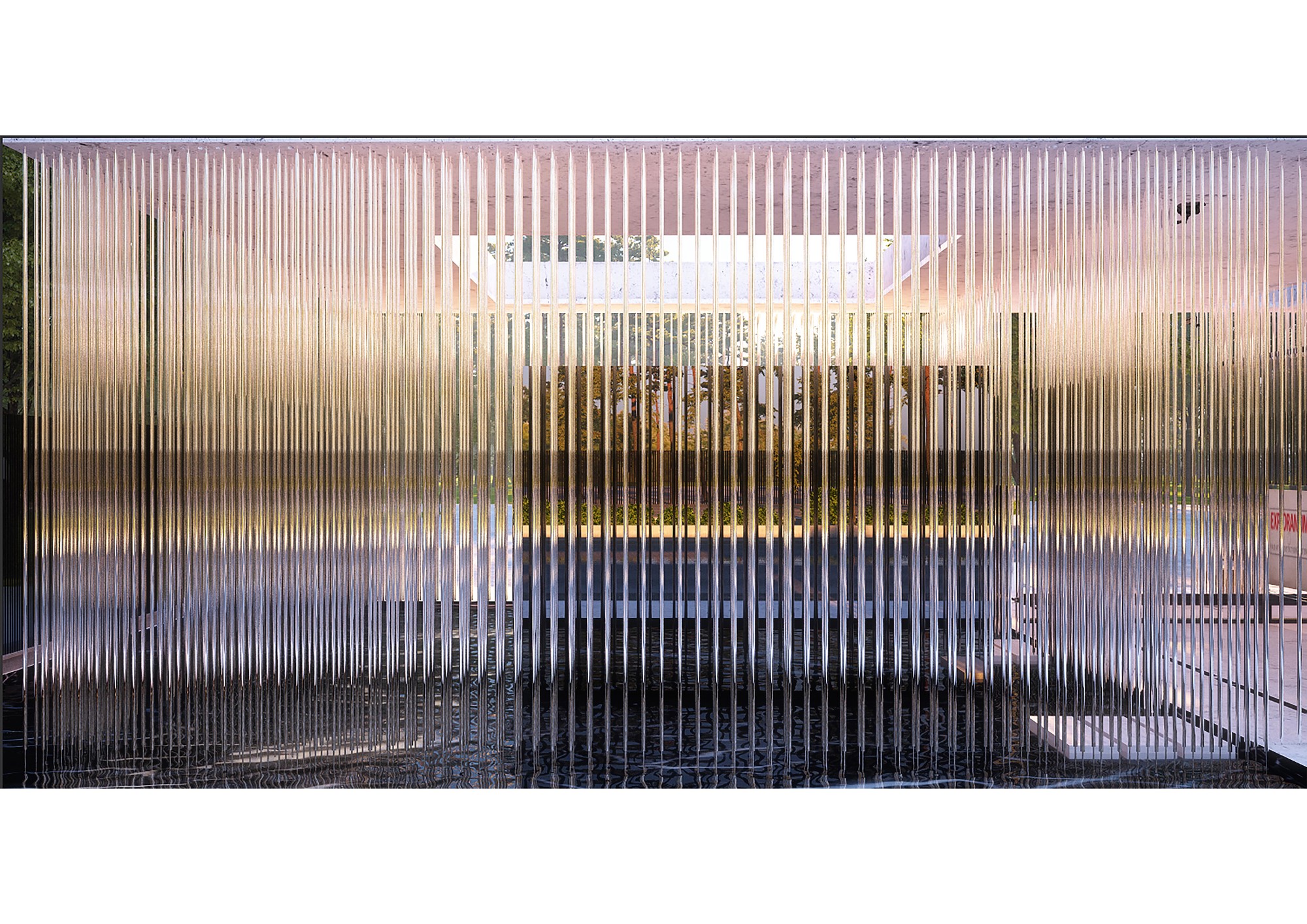
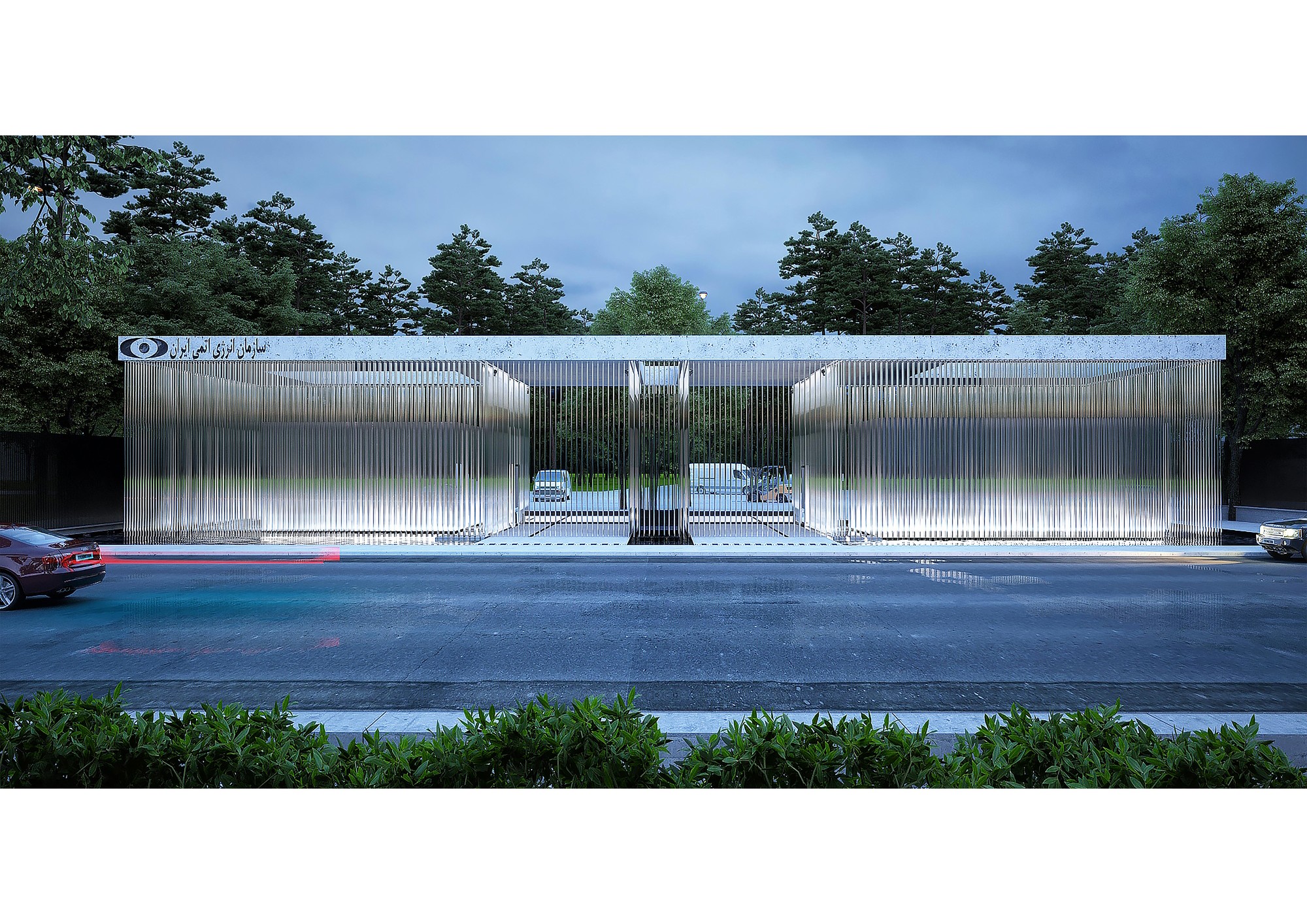
In recent years, global attention has focused on Iran’s peaceful nuclear activities, with international organizations frequently inspecting and monitoring the organization’s operations. The design of the entrance gate seeks to symbolize transparency while maintaining the necessary security for such a sensitive institution. The gate represents a boundary of transparency between the interior and exterior, reflecting the organization’s openness about its peaceful activities while ensuring its security. The concept features a semi-transparent spatial structure composed of stainless-steel pipes surrounding a simple volume. This design allows partial visibility into the interior from various exterior angles, while preserving the organization’s security. The project emphasizes creating a defined boundary between: • Inside and outside • Sky and ground • Certainty and uncertainty • Light and structure • Transparency and security This duality conveys the organization’s openness to external viewers while maintaining its protective measures. The structure consists of steel pipes spaced 15 cm apart with a diameter of 7 cm, forming a dense mass that ensures security. When the main gates close, a sliding steel door made of these pipes completely separates the interior from the exterior. The pipes emerge from a 10 cm deep water surface, creating a reflective base and visually integrating the structure with the environment. A horizontal canopy atop the pipes includes perforations to direct daylight onto the steel pipes. Additionally, two rectangular openings above functional volumes emphasize the interior spaces. The entrance complex is divided into three main sections: 1. Entrance Area 2. Exit Area 3. Vehicle Control Gate (centrally positioned) Security and Integration: Security equipment is seamlessly integrated between the pipes to maintain the visual coherence of the structure. Visitors entering or exiting on foot first pass through the semi-transparent space created by the pipes before proceeding to the internal or external areas. The gate’s design embodies a balance between transparency and security, creating a physical and symbolic representation of the organization’s dual need for openness and protection. Its interplay of light, structure, and functionality reinforces the institution’s mission and public perception.