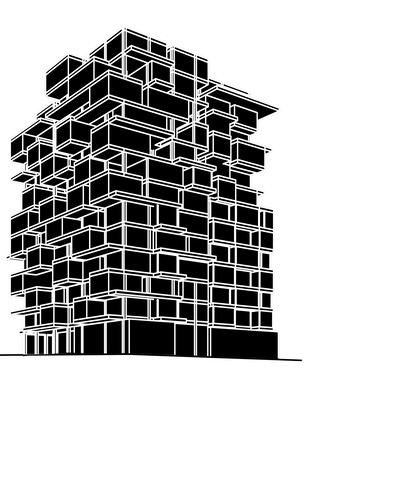
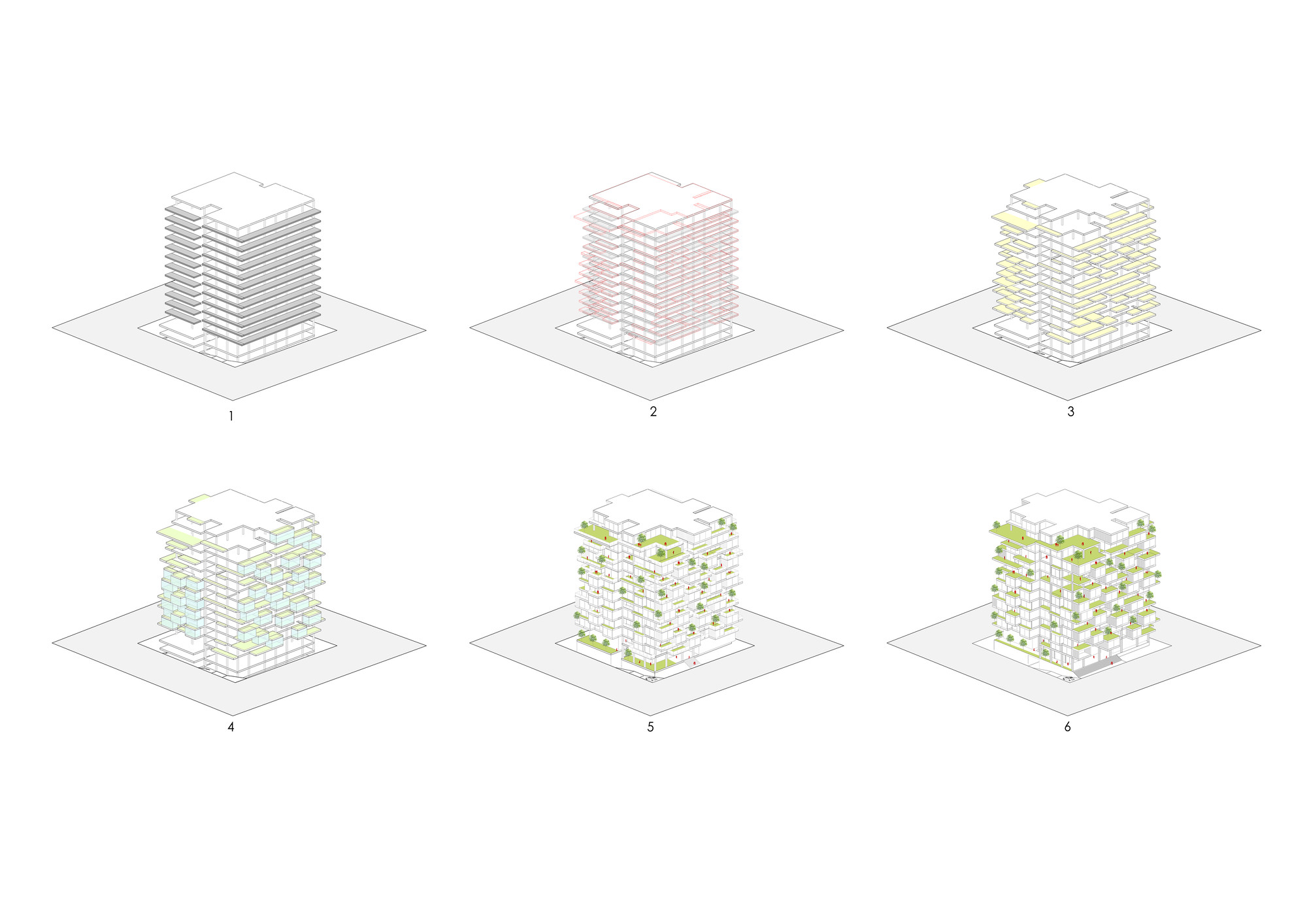
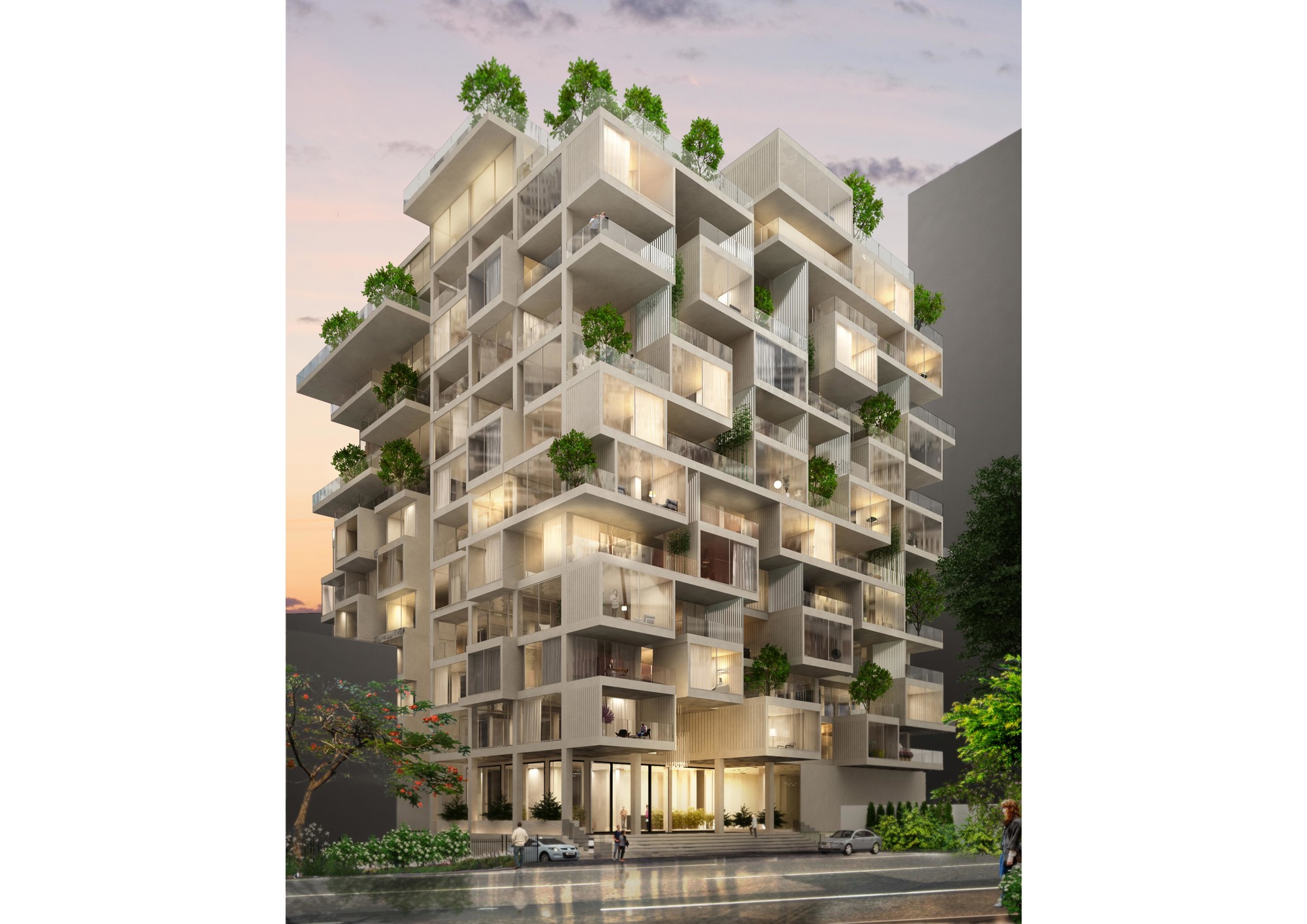
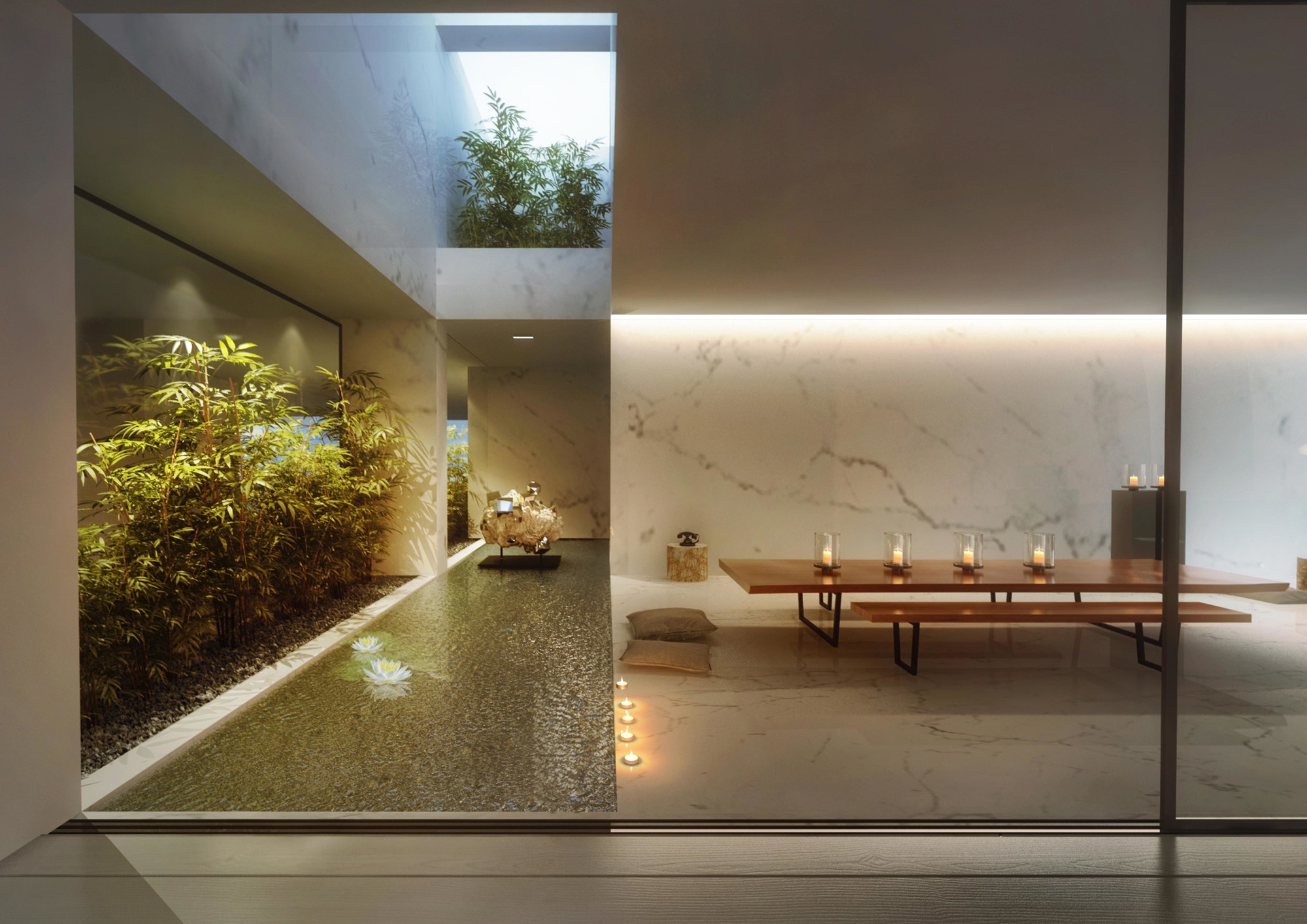
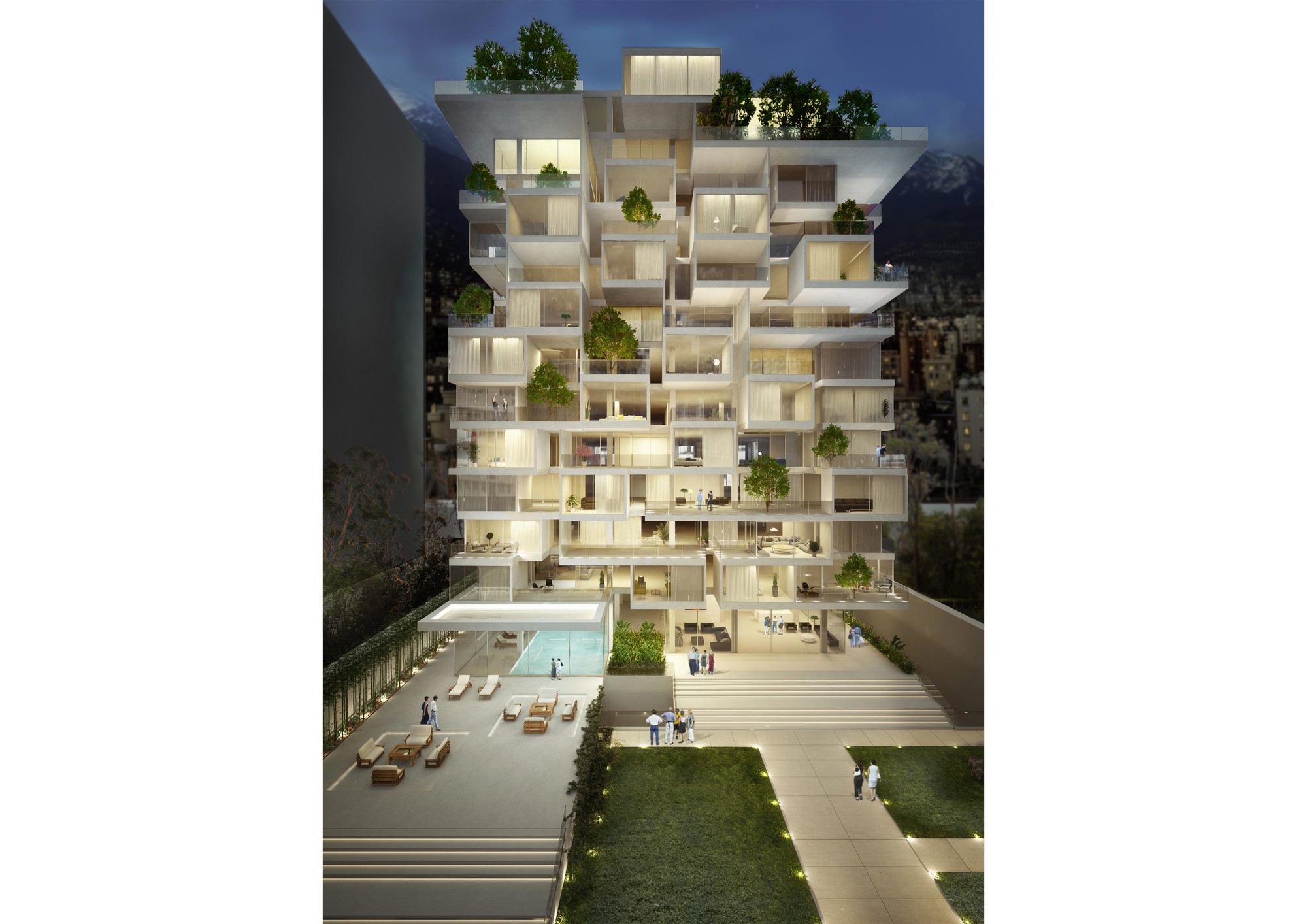
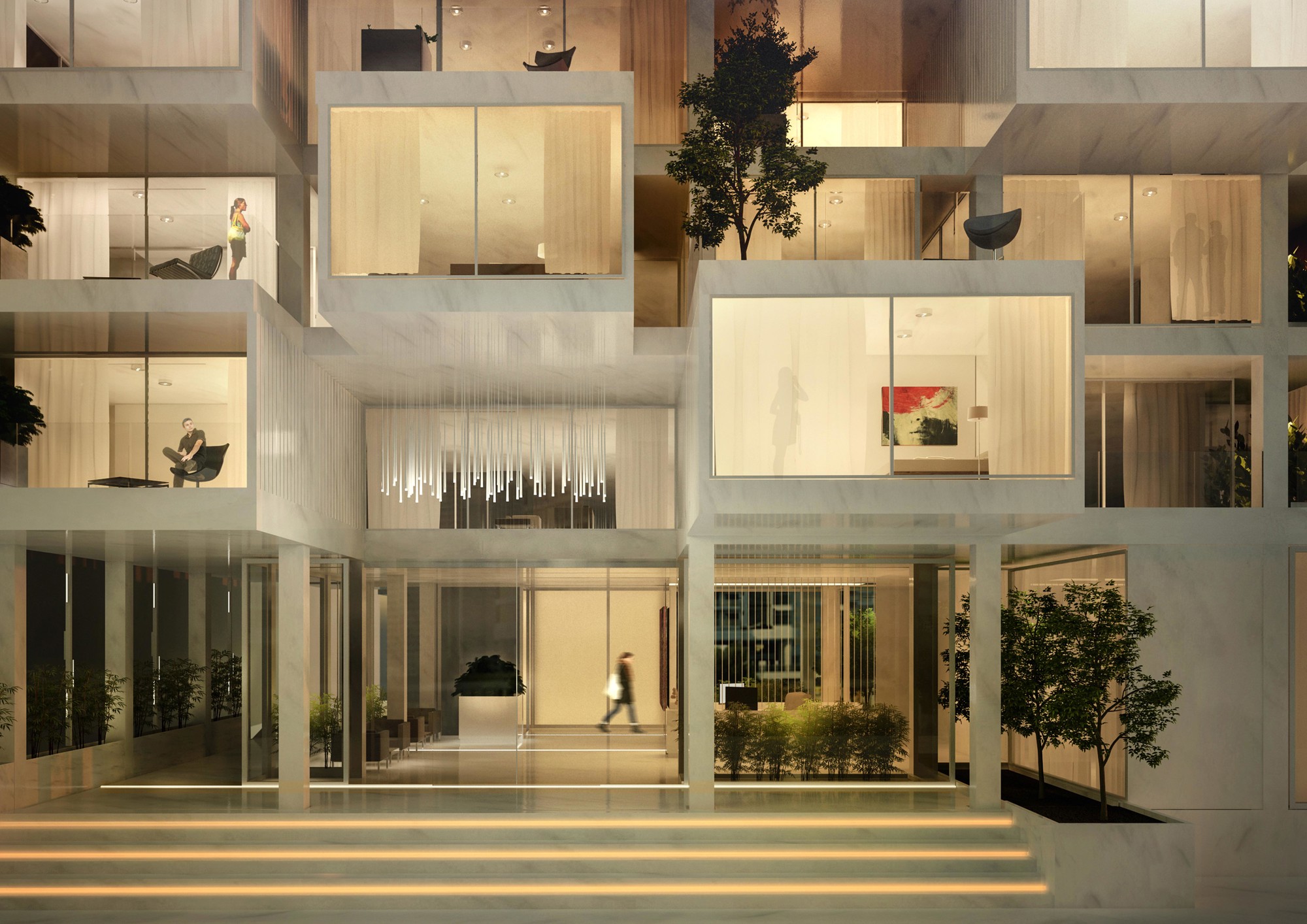
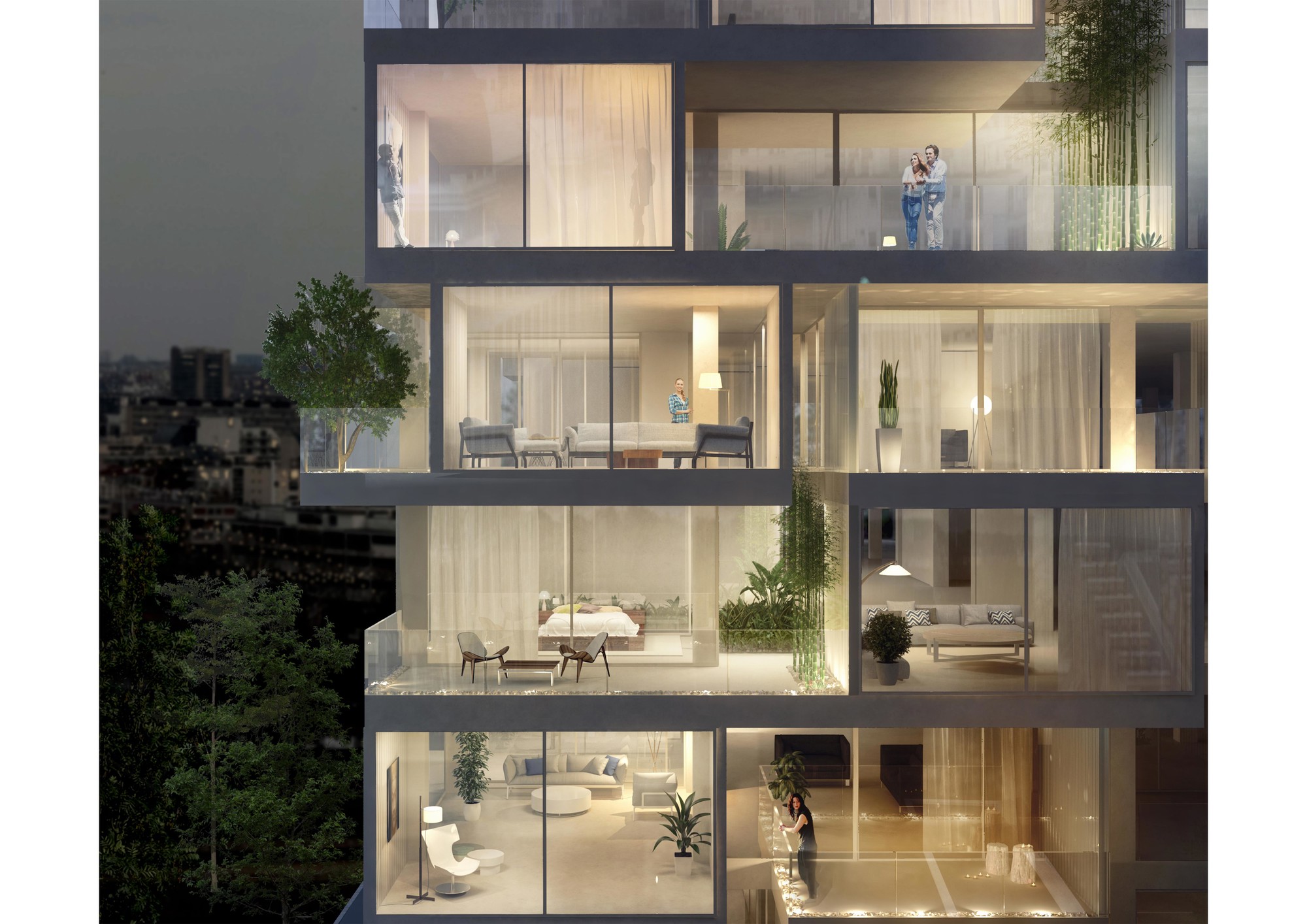
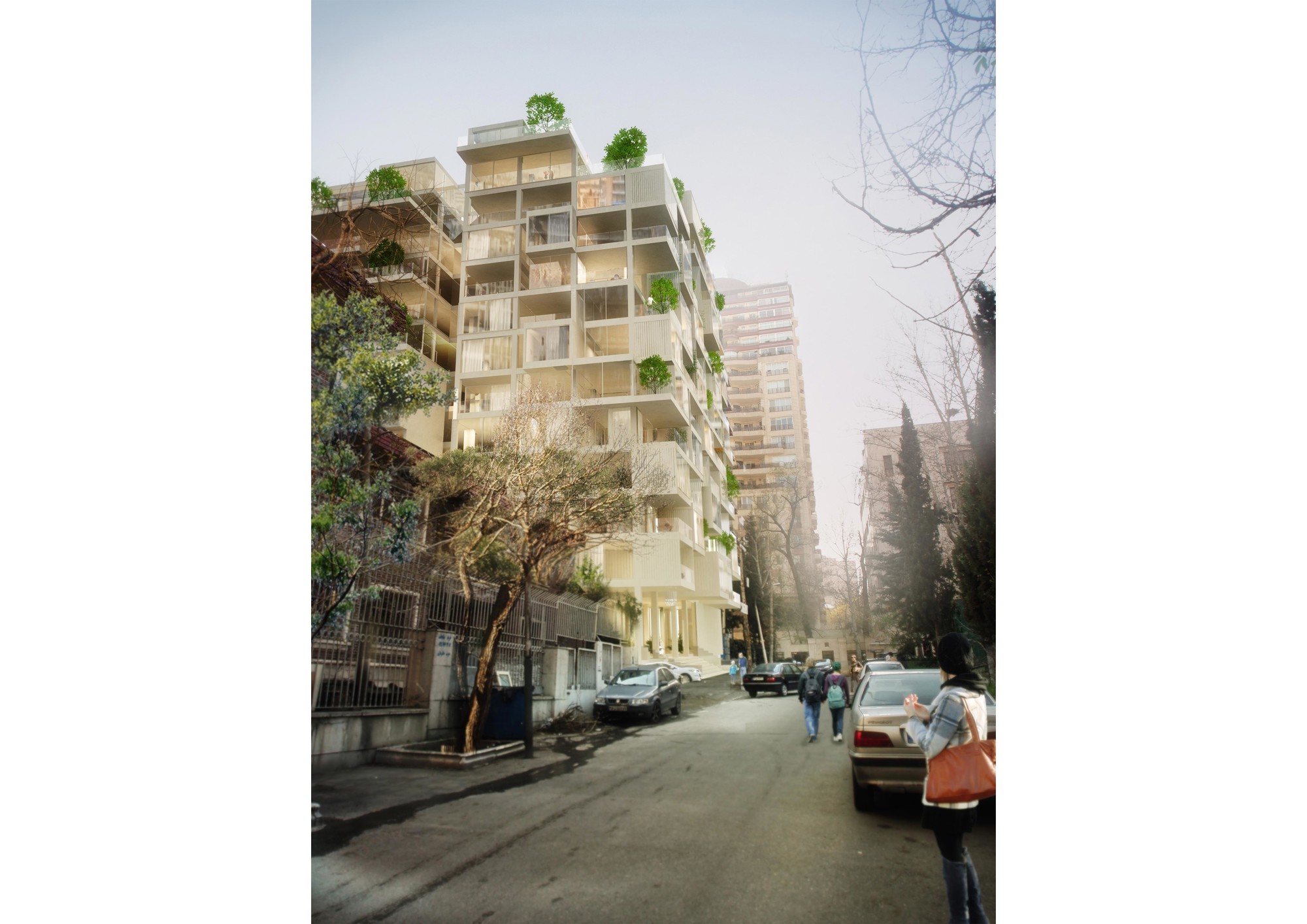
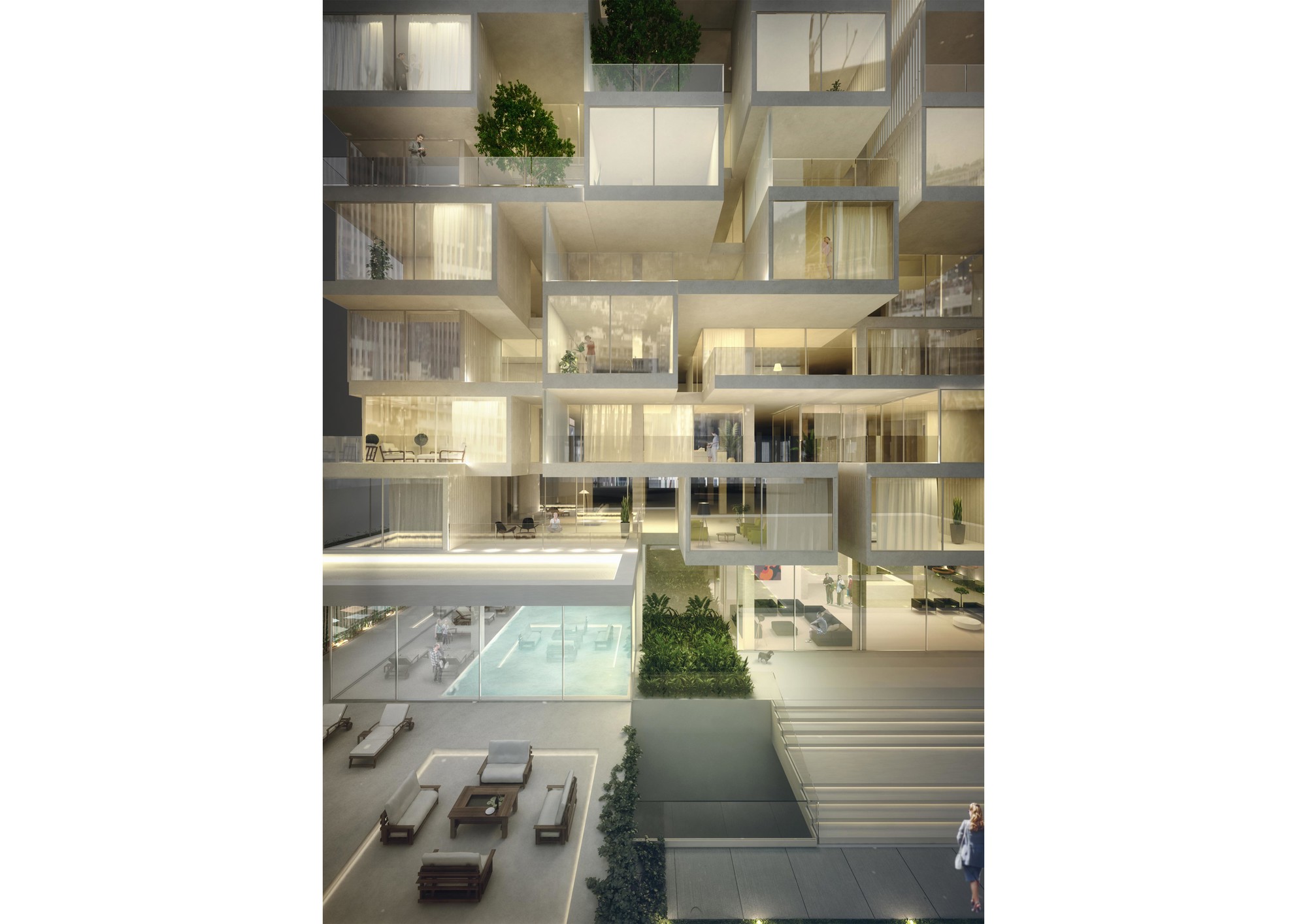
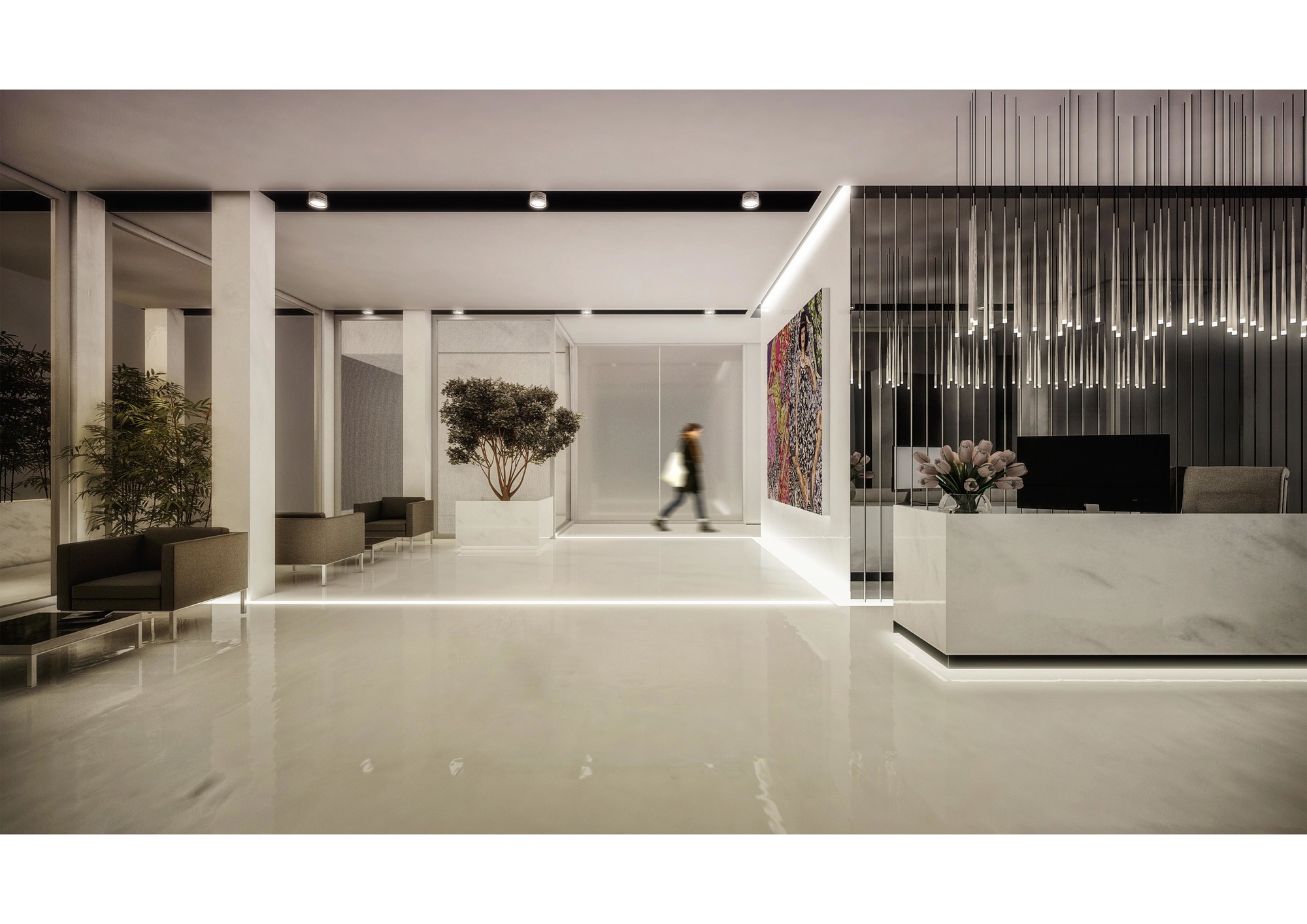
The design concept focuses on creating high-quality living spaces with open areas throughout various parts of the project, complemented by the inclusion of green spaces. Open areas extend from the exterior into the project, functioning as internal dividers. Maximizing natural light intake has been one of the primary objectives, achieved through the use of materials that allow light transmission. A cohesive organization of the project, both internally and externally, is another defining feature of the design. Spatial “boxes” shape both the interior and exterior of the structure, and by using transparent materials between them, diverse lighting qualities and spatial experiences are created within the residential units. Based on site analysis, we determined that the division of units follows this configuration: • The first seven floors consist of four units per floor. • Floors eight through ten have three units per floor. • The top two floors are designed with two units per floor. This layout enhances the economic viability of the project by improving its marketability. Additionally, by reducing the area of upper-floor units and increasing the size of lower-floor units, smaller units benefit from improved floor plans. Due to the limited area of certain spaces, especially the living rooms in the four-unit floors, we introduced cantilevered sections in areas where structural and regulatory constraints allowed. This approach increases the size of these spaces and improves their quality. Deeper spaces, particularly in the four-unit floors, have limited access to natural light, therefore transparent and semi-transparent materials have been employed to enhance illumination. In sections of the project with favorable views of the surroundings, full-height transparent glass has been used in compliance with fire safety regulations. In areas requiring both natural light and privacy, self-supporting frosted glass has been incorporated, allowing light transmission while preserving privacy.